
Reference · 16 September 2026
The Khavinson bioregulators: what the evidence actually says
The bioregulators have a real literature, a coherent theory and thin independent replication. What the evidence supports, and where it stops.
Read the post →
The bioregulators have a real literature, a coherent theory and thin independent replication. What the evidence supports, and where it stops.
Read the post →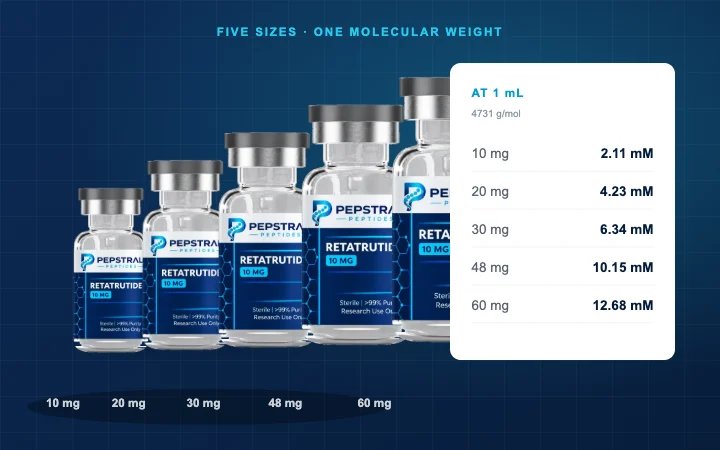
PEP-RTA-3 is the heaviest peptide here and among the slowest to dissolve. A concentration table for all five vial sizes, and why it takes its time.
Read the post →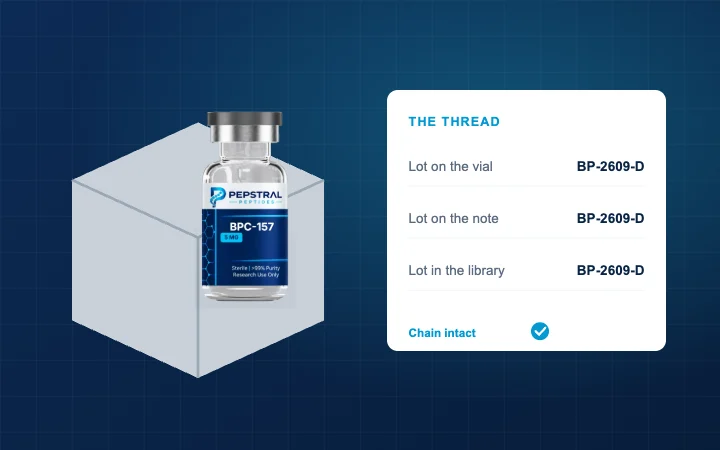
What happens between an order and the vial arriving: how it is picked, packed, documented and shipped, and where the certificate fits.
Read the post →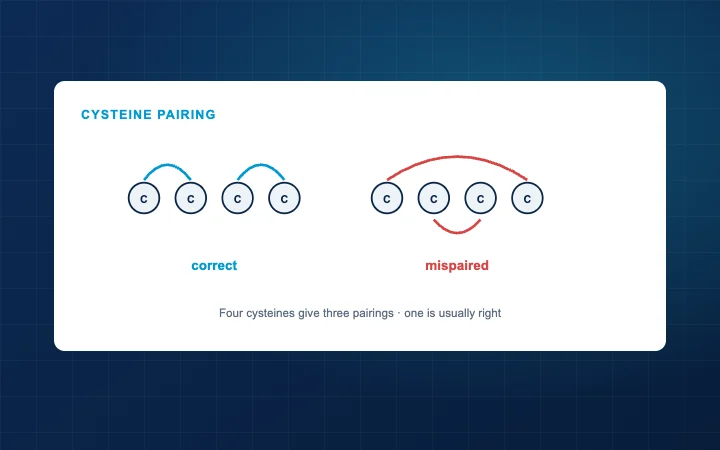
Each cysteine pair costs the molecule two hydrogens, so a folded peptide reads 2 Da lighter than its sequence predicts. How to check that on a certificate.
Read the post →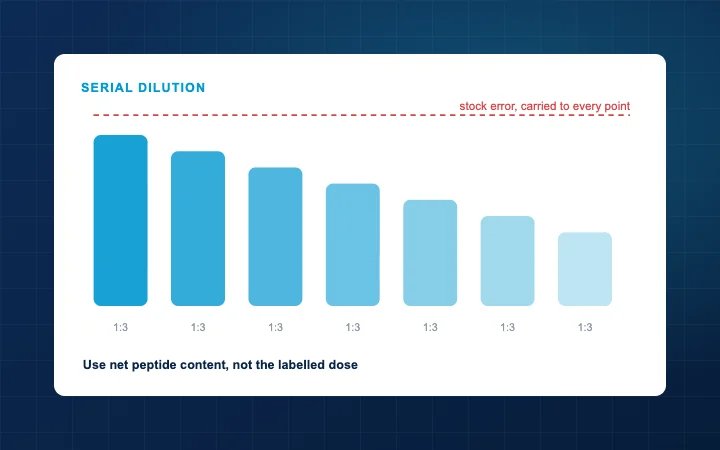
Peptide concentration-response work fails in ways small-molecule work does not: adsorption, aggregation, solvent effects. How to design around them.
Read the post →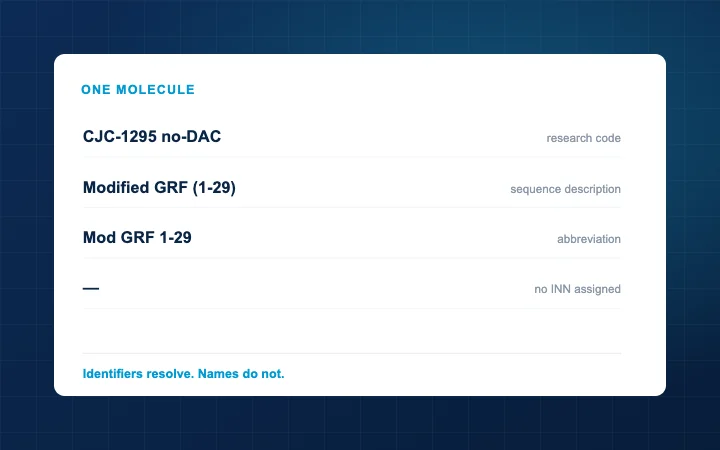
One compound can appear under four names on four sites. How research peptide naming works, and how to confirm two names are the same molecule.
Read the post →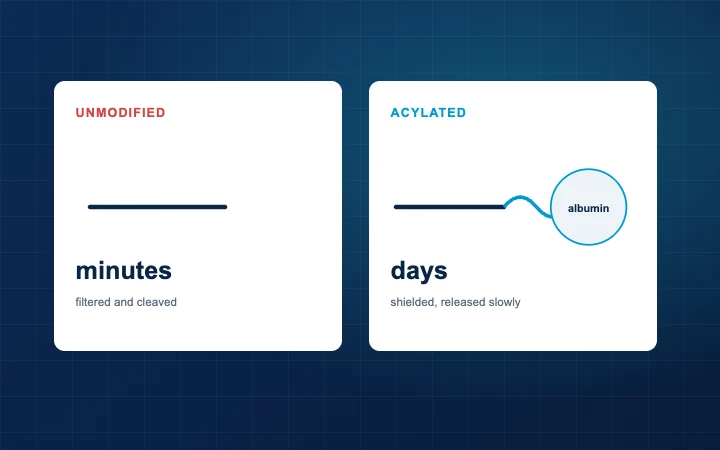
A fatty-acid chain binds albumin and keeps the peptide in circulation. Why that makes some peptides weekly and others last minutes.
Read the post →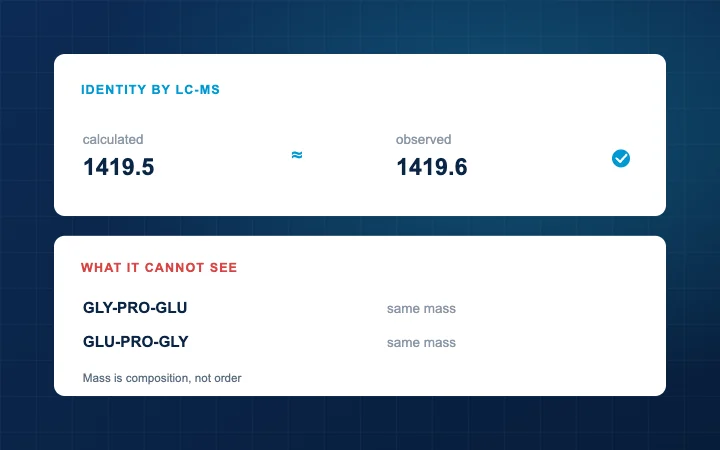
Confirmed by LC-MS means the mass matched, not that the sequence was read. What the method actually establishes, and what it cannot.
Read the post →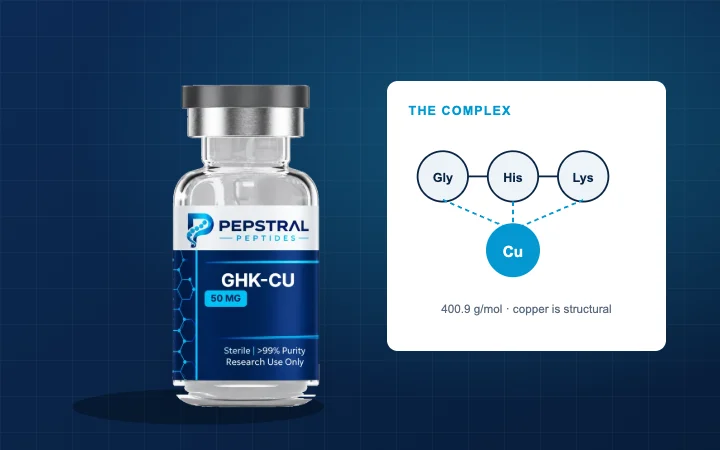
GHK-Cu is a tripeptide holding a copper atom, and the copper is a constituent, not an additive. Why the formula carries Cu and the mass is 400.9.
Read the post →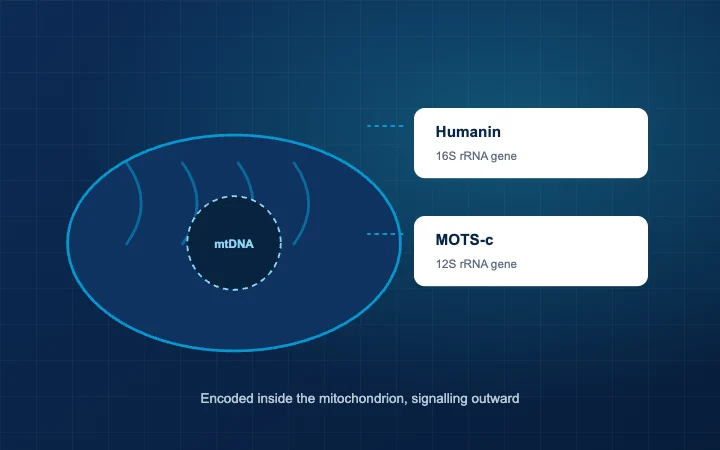
A handful of peptides are encoded in mitochondrial DNA rather than the nucleus. What that means, and which catalogue compounds belong to the group.
Read the post →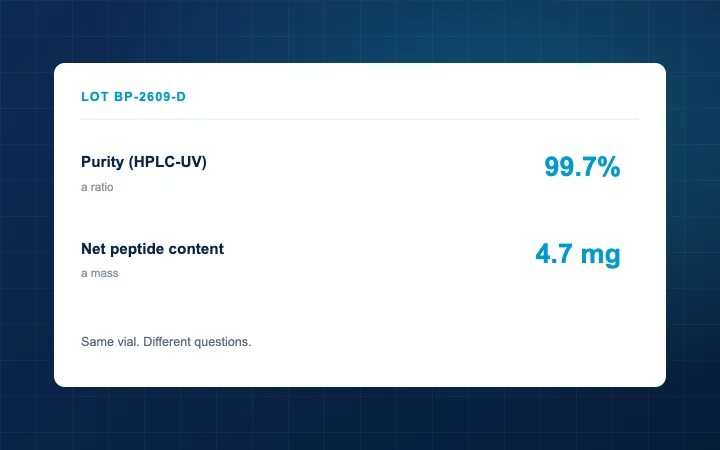
99% purity tells you nothing about how much peptide is in the vial. Purity is a ratio, content is a mass, and only one belongs in your calculation.
Read the post →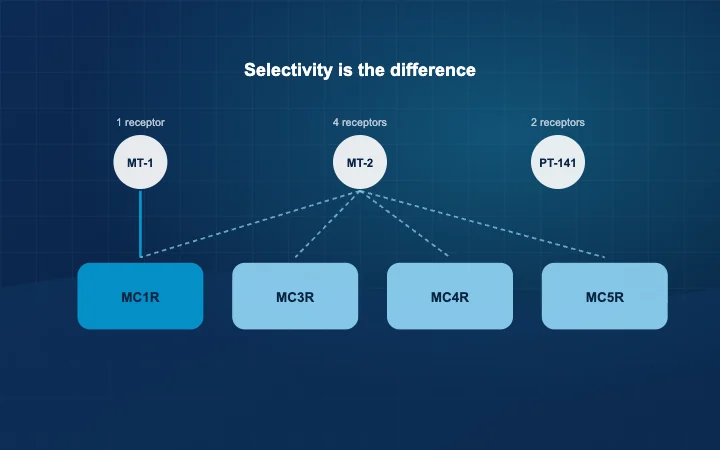
Melanotan-1, melanotan-2, PT-141 and KPV all descend from alpha-MSH and behave differently. Which receptor each reaches, and why that separates them.
Read the post →The blog covers buying, handling and research-design questions as they come up. The evergreen material lives in the guides: reading a certificate of analysis, storage and stability, one research guide per compound and the glossary.
New posts publish to the RSS feed. Every post is written for laboratory research use only and links to the lot certificate for any product it mentions.
One email when a new certificate is published, when a sold-out compound is back, or when a new compound is added. About twice a month, nothing else.