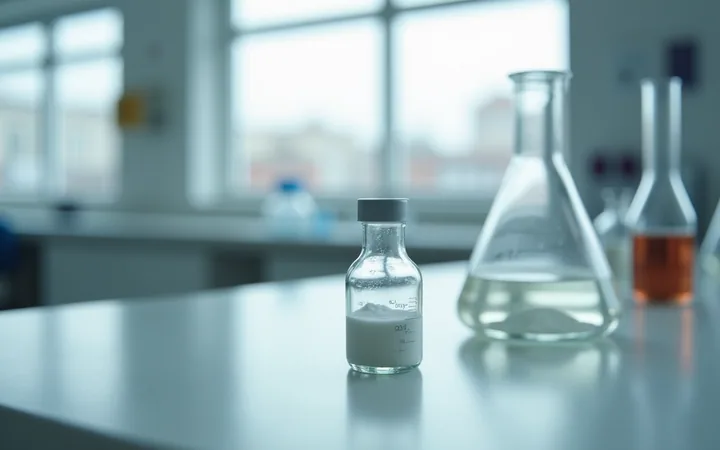
Will this peptide dissolve? Reading solubility off the sequence before you open the vial
Net charge and hydropathy predict which solvent a peptide needs. Every catalogue sequence scored, and what each score means at the bench.
Read the post →
Net charge and hydropathy predict which solvent a peptide needs. Every catalogue sequence scored, and what each score means at the bench.
Read the post →
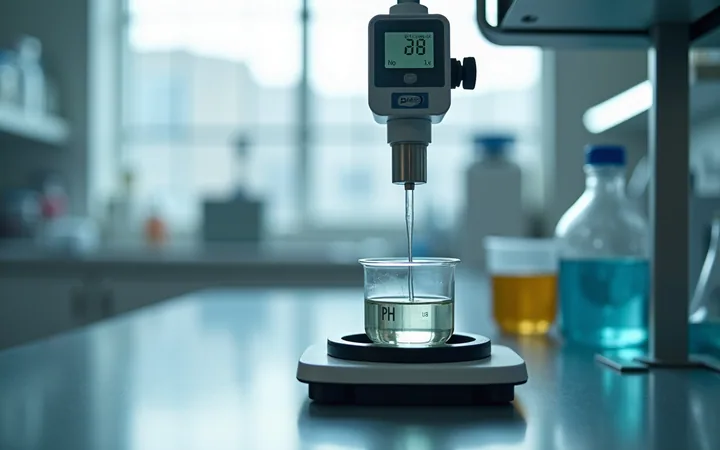
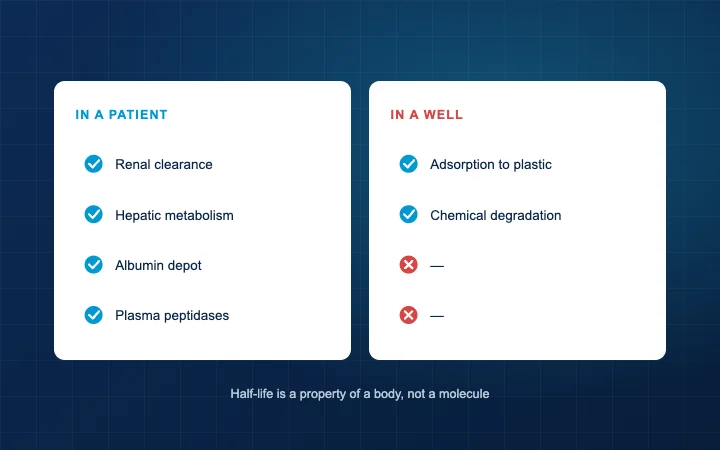
How the plasma stability assay is run: matrix choice, time course, controls, quenching, and the four things the result cannot tell you.
Read the post →
When a peptide needs an organic cosolvent, what concentration cells tolerate, and why the vehicle control cannot be skipped.
Read the post →
The right pH depends on the peptide's charge and what you are measuring. How to choose one, which buffers suit peptides, and which to avoid.
Read the post →
A stability study asks how much peptide survives defined conditions, and what the rest became. How to design one, and what forced degradation is for.
Read the post →
A ring changes a peptide's stability, shape and HPLC behaviour. How cyclic and linear peptides differ, and how to tell which one you have.
Read the post →
Clinical papers report milligrams per person; your plate works in micromolar. Why the conversion is not arithmetic, and what does transfer.
Read the post →
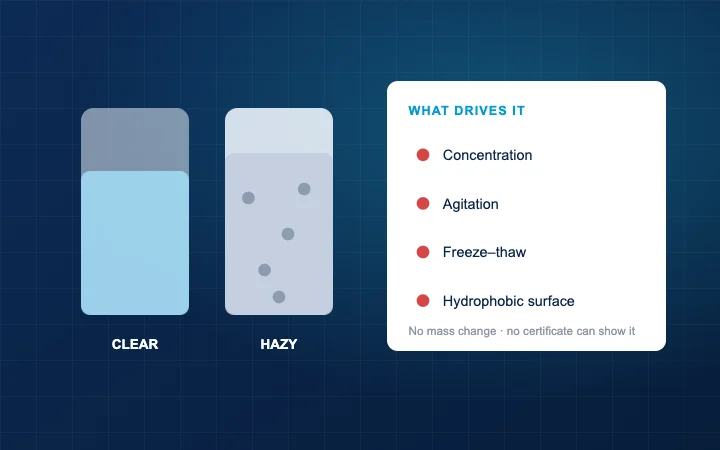
Every other failure leaves a trace on a certificate. Aggregation does not. What it is, what triggers it, and the signs you can actually see.
Read the post →
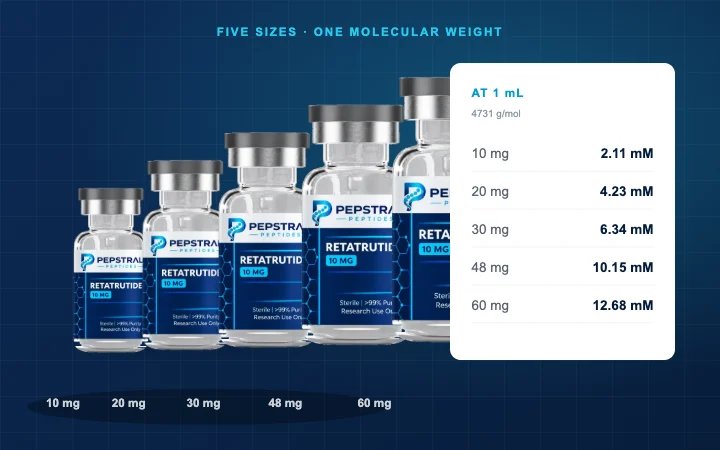
PEP-RTA-3 is the heaviest peptide here and among the slowest to dissolve. A concentration table for all five vial sizes, and why it takes its time.
Read the post →
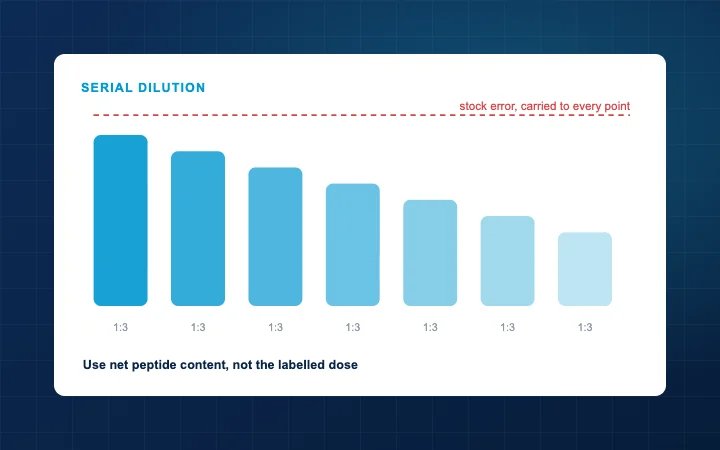
Peptide concentration-response work fails in ways small-molecule work does not: adsorption, aggregation, solvent effects. How to design around them.
Read the post →
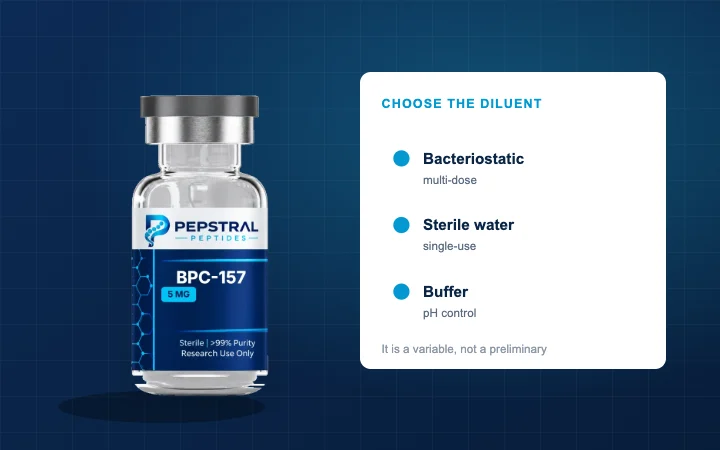
Bacteriostatic water is the default, not the only answer. How to choose a diluent from the peptide's charge, your assay and the vial's working life.
Read the post →
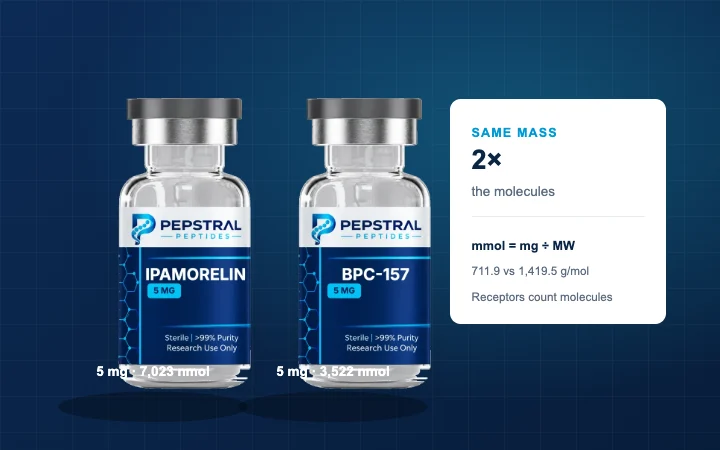
5 mg of ipamorelin and 5 mg of BPC-157 are the same mass and very different molecule counts. How to convert, and which number to start from.
Read the post →The blog covers buying, handling and research-design questions as they come up. The evergreen material lives in the guides: reading a certificate of analysis, storage and stability, one research guide per compound and the glossary.
New posts publish to the RSS feed. Every post is written for laboratory research use only and links to the lot certificate for any product it mentions.
One email when a new certificate is published, when a sold-out compound is back, or when a new compound is added. About twice a month, nothing else.