Reference · 15 September 2026
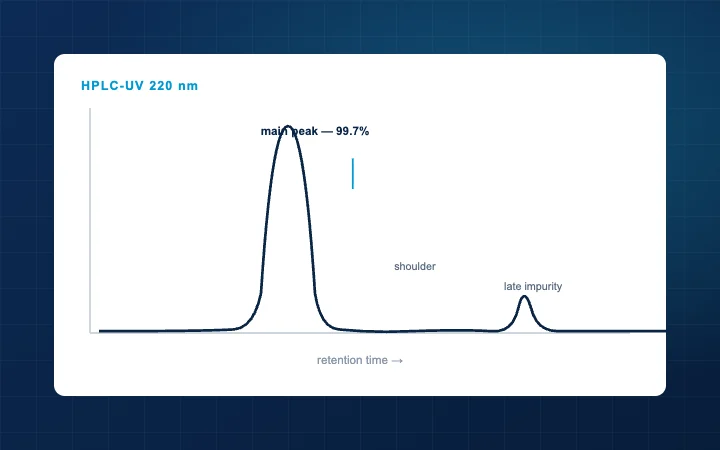
How to read the HPLC chromatogram on a certificate
Peaks, retention time and baseline read off a real certificate. Why area percent is not weight percent, and what a shoulder beside the main peak means.
Read the post →
Peaks, retention time and baseline read off a real certificate. Why area percent is not weight percent, and what a shoulder beside the main peak means.
Read the post →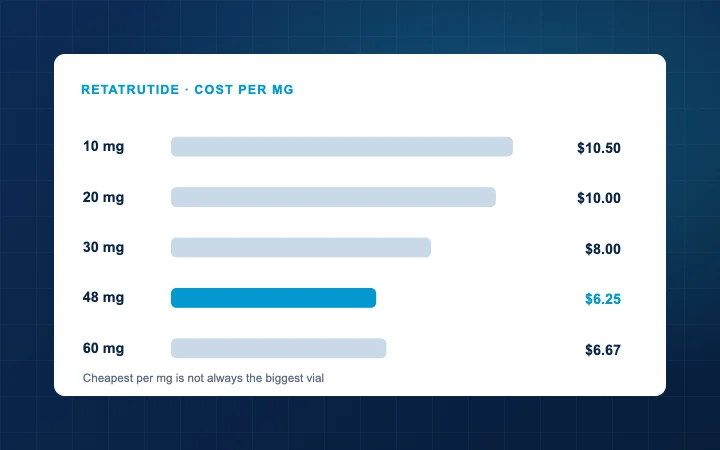
Bigger vials are cheaper per milligram, and that saving is real only if the material is used before it degrades. How to size a vial to a study.
Read the post →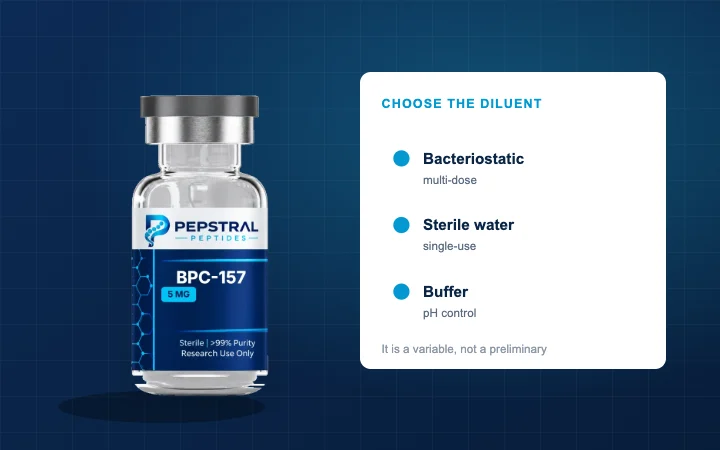
Bacteriostatic water is the default, not the only answer. How to choose a diluent from the peptide's charge, your assay and the vial's working life.
Read the post →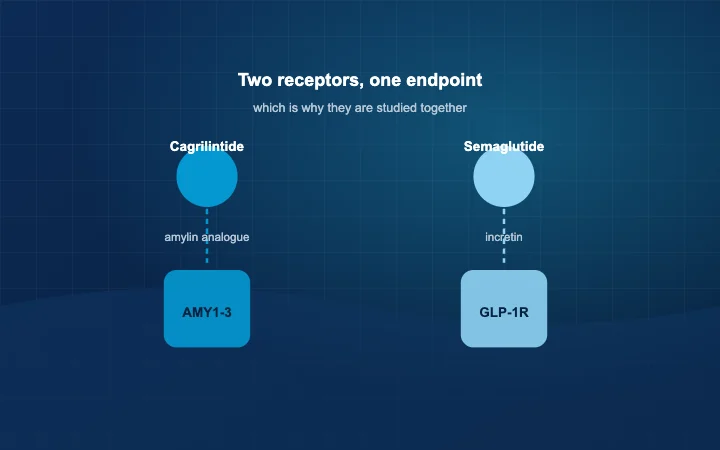
Amylin is the other half of the meal-response pair with GLP-1. What amylin analogues do, and why they are studied alongside incretin agonists.
Read the post →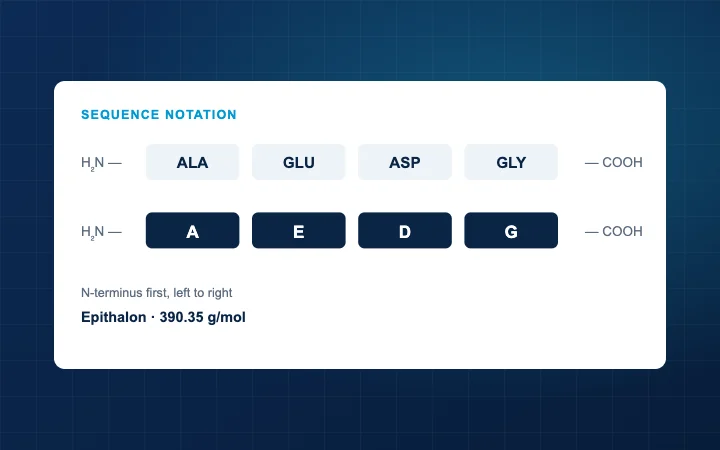
One- and three-letter codes read from the N-terminus, and why two different peptides can share a mass. Worked from sequences on real certificates.
Read the post →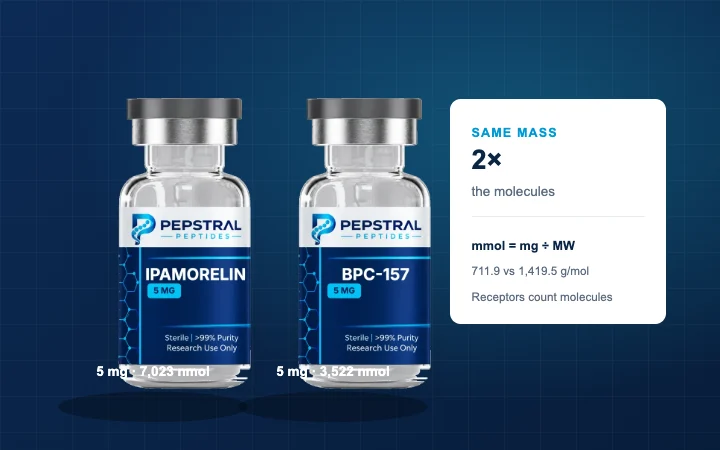
5 mg of ipamorelin and 5 mg of BPC-157 are the same mass and very different molecule counts. How to convert, and which number to start from.
Read the post →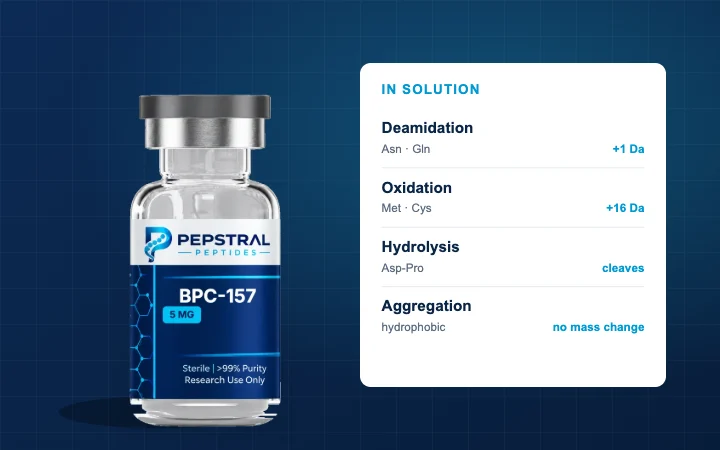
There is no single answer, and a supplier who gives one is guessing. What sets the limit for your peptide, and how to decide a working window.
Read the post →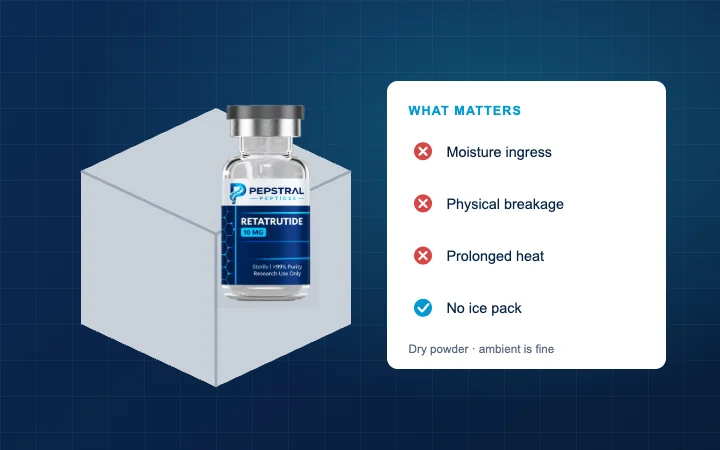
Lyophilized peptides ship at ambient temperature across the industry. Why that is defensible for a dry solid, and when cold chain genuinely matters.
Read the post →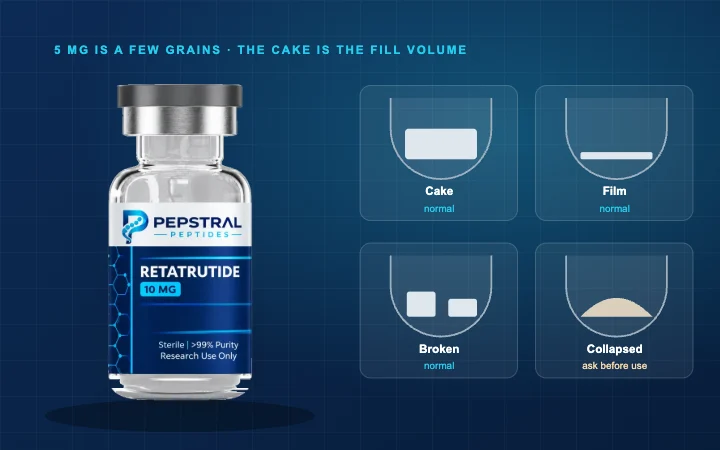
Five milligrams of lyophilized peptide is a few grains. Why the vial looks empty, what the cake should look like, and when to be concerned.
Read the post →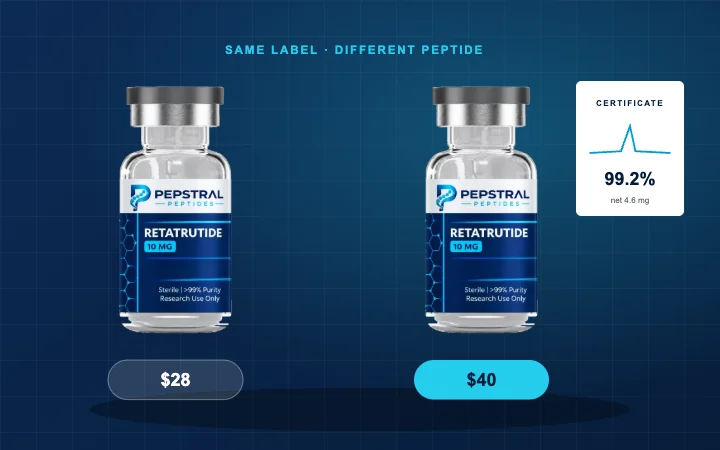
Four things explain most of the gap between two vials with the same label: synthesis difficulty, purification, testing and order volume.
Read the post →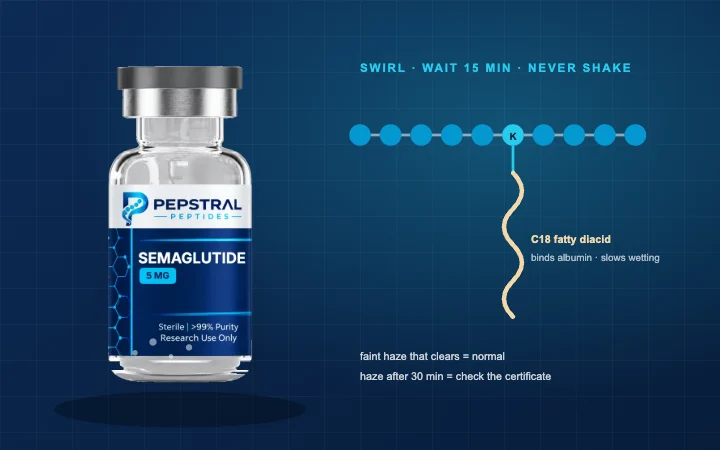
The fatty-acid chain that extends half-life also makes these peptides slow to dissolve. Why that happens, and how to reconstitute without forcing it.
Read the post →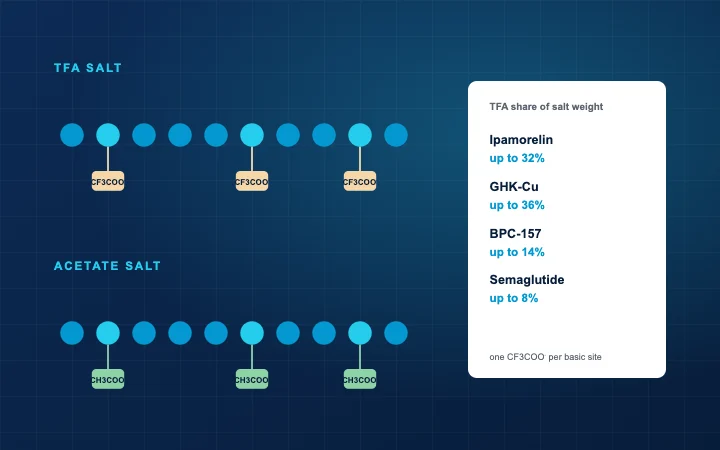
Nearly every research peptide arrives as a TFA salt because TFA cuts the chain off the resin. When the counter-ion matters, and when it does not.
Read the post →The blog covers buying, handling and research-design questions as they come up. The evergreen material lives in the guides: reading a certificate of analysis, storage and stability, one research guide per compound and the glossary.
New posts publish to the RSS feed. Every post is written for laboratory research use only and links to the lot certificate for any product it mentions.
One email when a new certificate is published, when a sold-out compound is back, or when a new compound is added. About twice a month, nothing else.