Certificates · 23 September 2026
Reading a certificate for a tripeptide
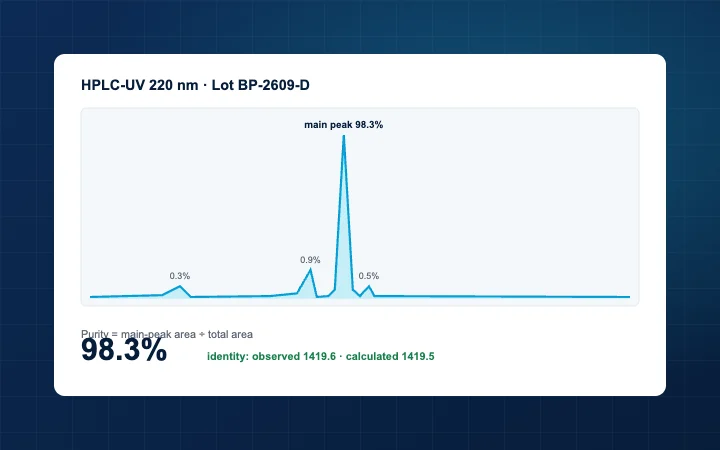
At three residues the usual certificate advice breaks down: retention is short, the mass is small, and purity means something different.
Read the post →
At three residues the usual certificate advice breaks down: retention is short, the mass is small, and purity means something different.
Read the post →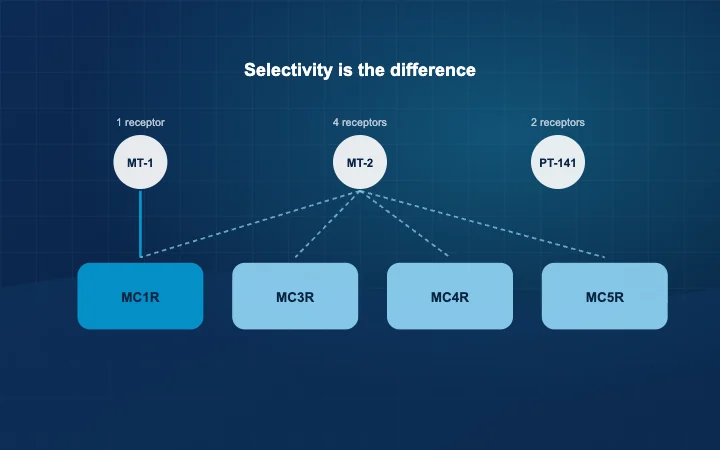
PT-141 reaches several melanocortin receptors, which is why its profile differs from melanotan-2. What the family is and which receptor does what.
Read the post →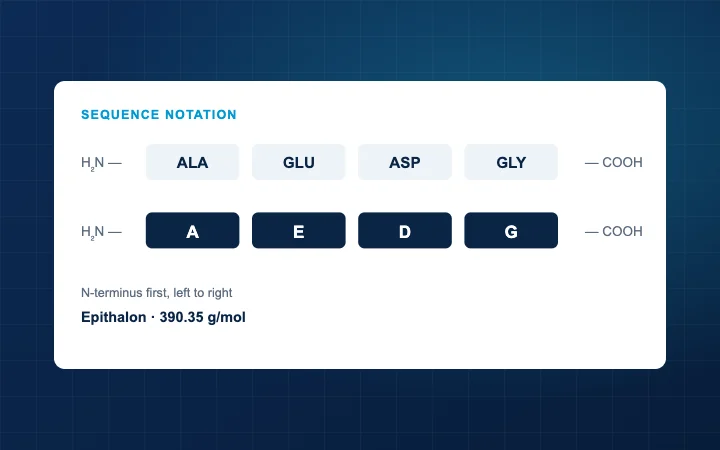
A ring changes a peptide's stability, shape and HPLC behaviour. How cyclic and linear peptides differ, and how to tell which one you have.
Read the post →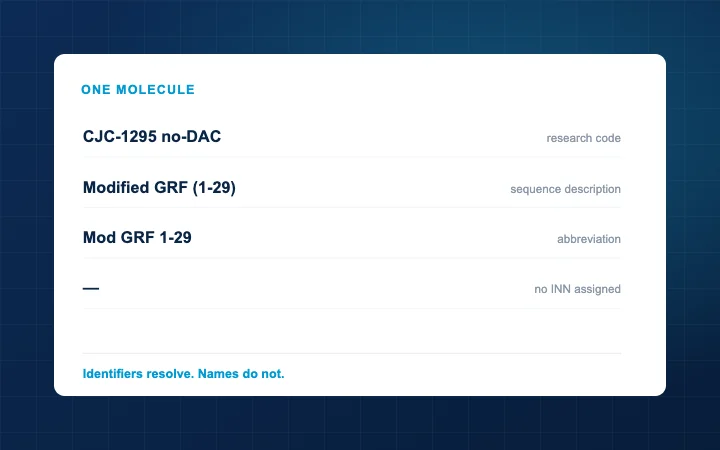
Adamax and Semax share a lineage and differ by one adamantane group. What that change does, and how to tell the two apart on a certificate.
Read the post →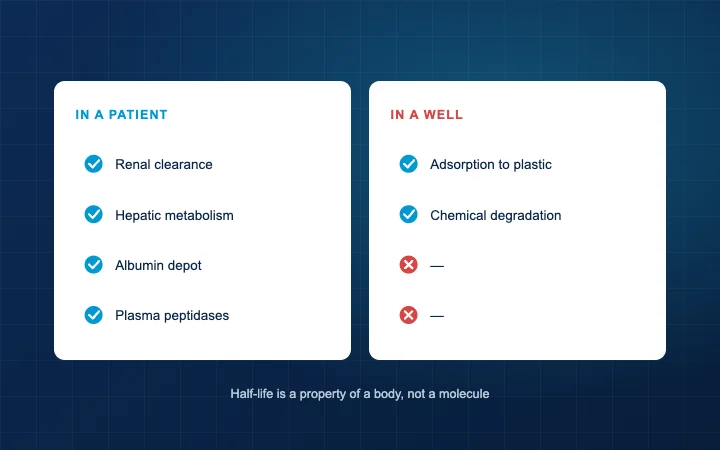
Clinical papers report milligrams per person; your plate works in micromolar. Why the conversion is not arithmetic, and what does transfer.
Read the post →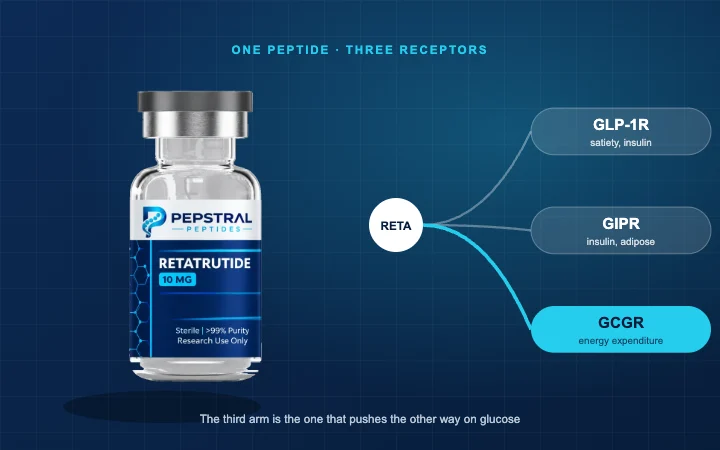
PEP-RTA-3 adds a third receptor the others do not touch. What the glucagon arm changes, and why adding it is not obviously a good idea.
Read the post →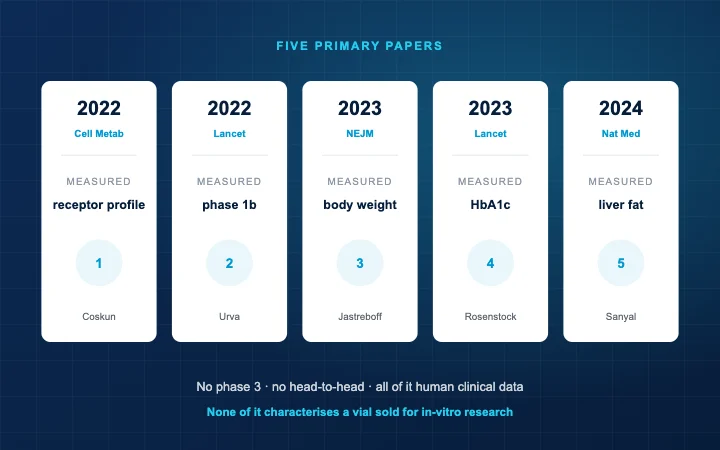
Five primary papers carry most of what is known. What each measured, in which population, and why the headline figure travels without its context.
Read the post →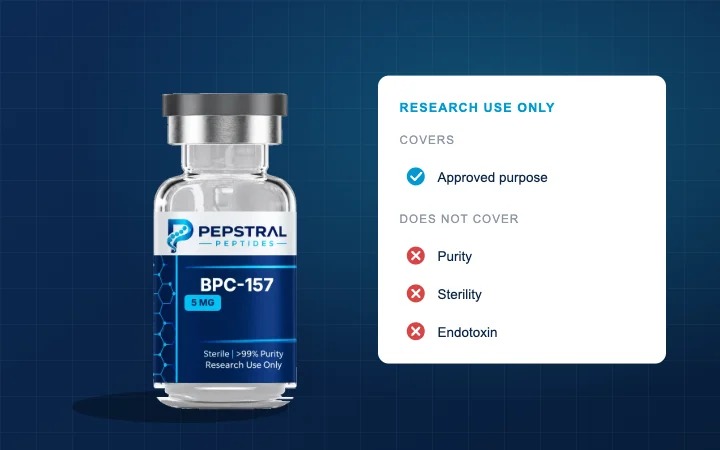
Research use only is a statement of intended use, and the FDA reads intended use from everything a seller says. What the label does not permit.
Read the post →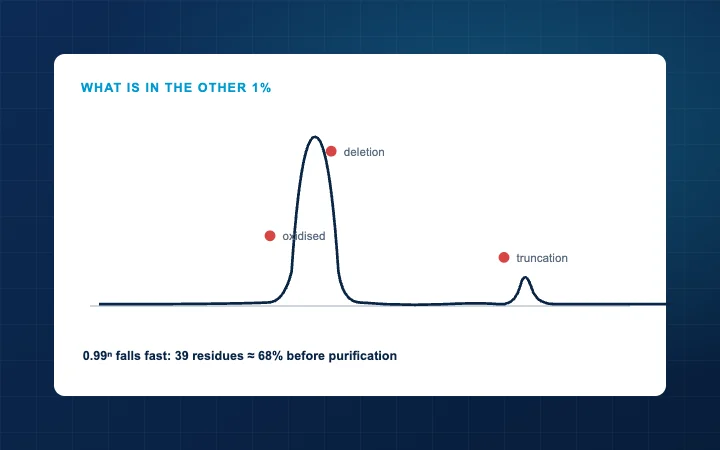
A certificate reports 99.4% and the question is what the rest is. Deletions, truncations, oxidised forms and counter-ion, in order of likelihood.
Read the post →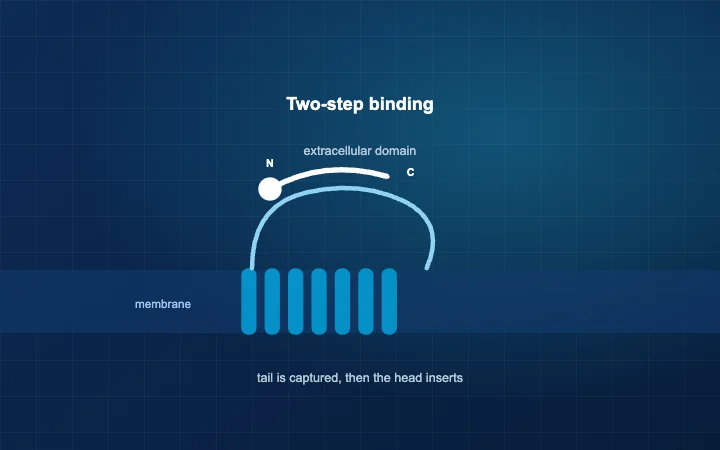
Most peptide targets in this catalogue are G protein-coupled receptors. What a GPCR is, how it signals, and why peptides so often bind one.
Read the post →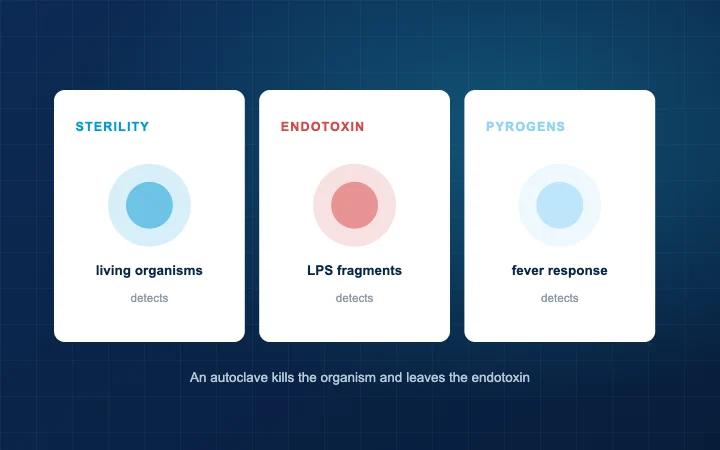
Sterility, endotoxin and pyrogen testing prove three different things. What each test covers, what it misses, and which your work needs.
Read the post →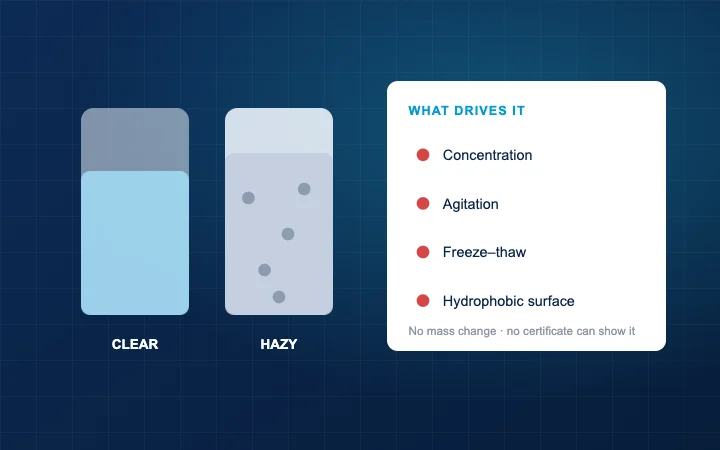
Every other failure leaves a trace on a certificate. Aggregation does not. What it is, what triggers it, and the signs you can actually see.
Read the post →The blog covers buying, handling and research-design questions as they come up. The evergreen material lives in the guides: reading a certificate of analysis, storage and stability, one research guide per compound and the glossary.
New posts publish to the RSS feed. Every post is written for laboratory research use only and links to the lot certificate for any product it mentions.
One email when a new certificate is published, when a sold-out compound is back, or when a new compound is added. About twice a month, nothing else.