KPV: the alpha-MSH tripeptide, its CAS number, its sequence, and what a 10 mg certificate shows
KPV is lysine-proline-valine, the last three residues of alpha-MSH. CAS 67727-97-3, mass 342.43, and what a 10 mg certificate reports.
Read the post →

KPV is lysine-proline-valine, the last three residues of alpha-MSH. CAS 67727-97-3, mass 342.43, and what a 10 mg certificate reports.
Read the post →
Five Khavinson peptides differ by one or two residues; the sixth is an extract. Sequences, masses and certificate figures, side by side.
Read the post →
IGF-1 LR3 carries an arginine at position 3 and 13 extra N-terminal residues. What those changes do, and what a 1 mg certificate reports.
Read the post →
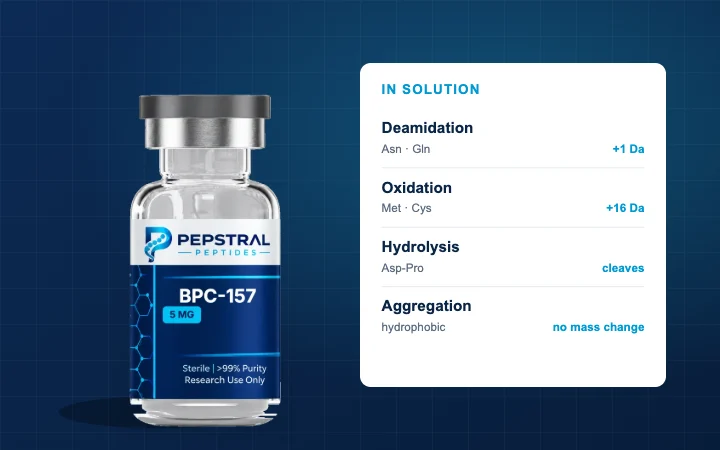
GHRP-6 was the first growth hormone releasing peptide, mass 873.0. How it differs from ipamorelin, and what the blend certificate reports.
Read the post →
Standard handling advice assumes a chain long enough to fold. At three residues it does not apply, and the failure modes change.
Read the post →
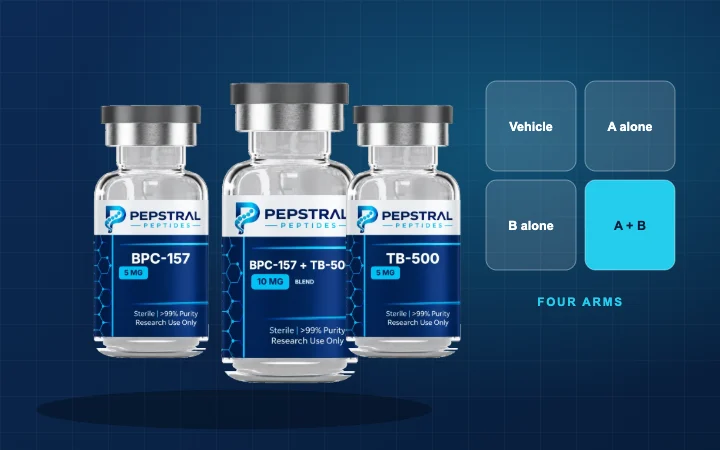
Two peptides in one bottle is not a neutral act. Why these two tolerate it, what the shared solution has to satisfy, and when blending fails.
Read the post →
A few products ship already in solution rather than as a powder. What makes that the better format, and what it costs in shelf life.
Read the post →
Glutathione carries one cysteine, and that single thiol is why it oxidises in solution and why the certificate figure moves.
Read the post →
Adamantane is a rigid ten-carbon cage. What attaching it to a peptide changes about stability, solubility and how the molecule behaves.
Read the post →
Bioregulator is a category name, not a pharmacological class. Where the term came from, what it groups together, and what it does not establish.
Read the post →
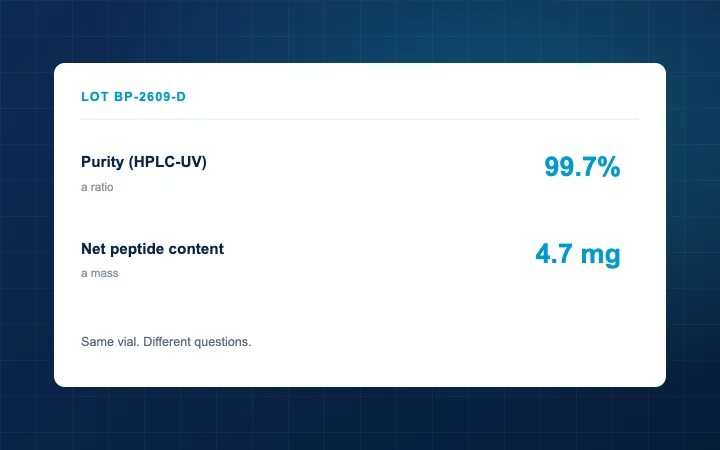
On a blend certificate the content line reports one component, not the vial total. How to read it, and the figure most buyers misread.
Read the post →
Oxytocin is nine residues closed by one disulphide bridge, and that single bond is what dictates how the vial must be stored and handled.
Read the post →The blog covers buying, handling and research-design questions as they come up. The evergreen material lives in the guides: reading a certificate of analysis, storage and stability, one research guide per compound and the glossary.
New posts publish to the RSS feed. Every post is written for laboratory research use only and links to the lot certificate for any product it mentions.
One email when a new certificate is published, when a sold-out compound is back, or when a new compound is added. About twice a month, nothing else.