The melanocortin receptors, and why melanotan-1 and -2 differ
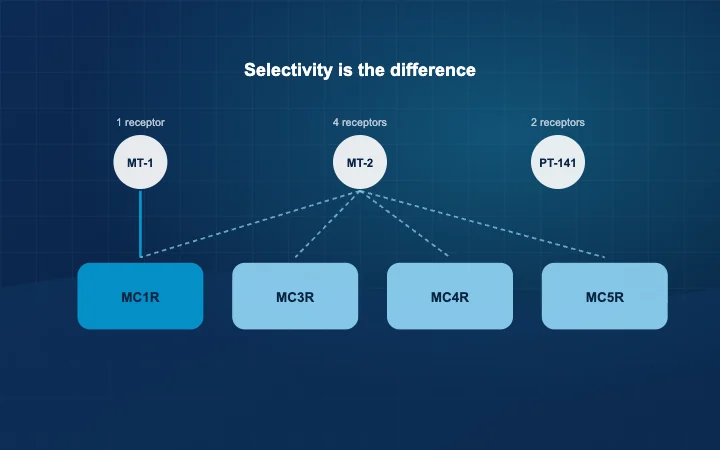
Melanotan-1, melanotan-2, PT-141 and KPV all descend from alpha-MSH and behave differently. Which receptor each reaches, and why that separates them.
Read the post →
Melanotan-1, melanotan-2, PT-141 and KPV all descend from alpha-MSH and behave differently. Which receptor each reaches, and why that separates them.
Read the post →
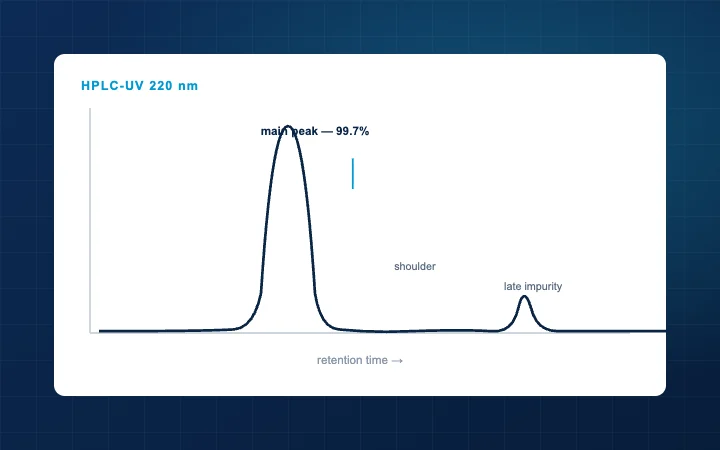
Peaks, retention time and baseline read off a real certificate. Why area percent is not weight percent, and what a shoulder beside the main peak means.
Read the post →
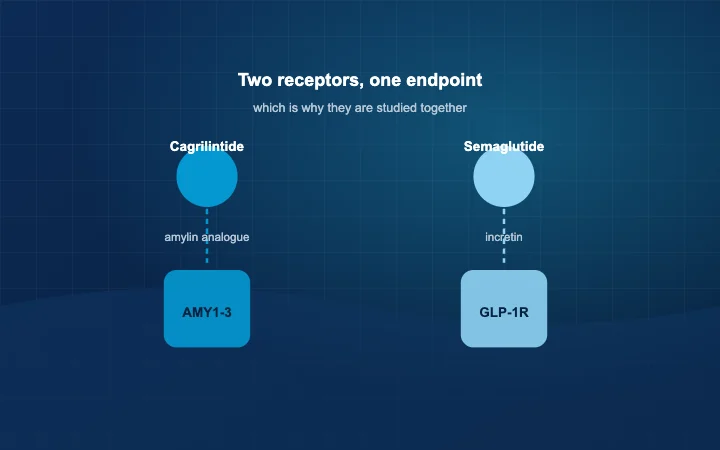
Amylin is the other half of the meal-response pair with GLP-1. What amylin analogues do, and why they are studied alongside incretin agonists.
Read the post →
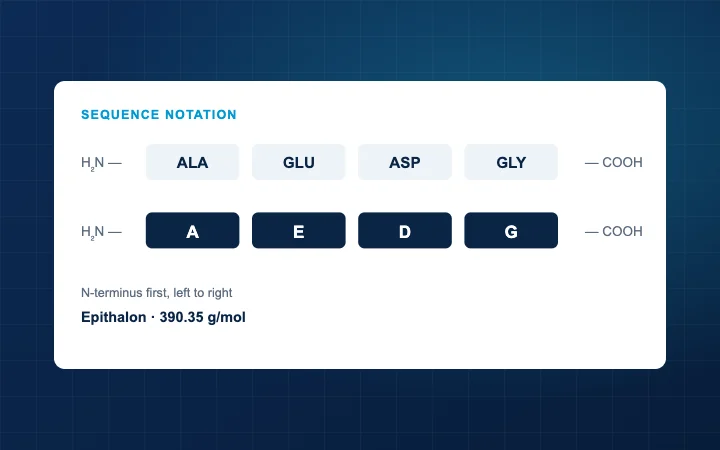
One- and three-letter codes read from the N-terminus, and why two different peptides can share a mass. Worked from sequences on real certificates.
Read the post →
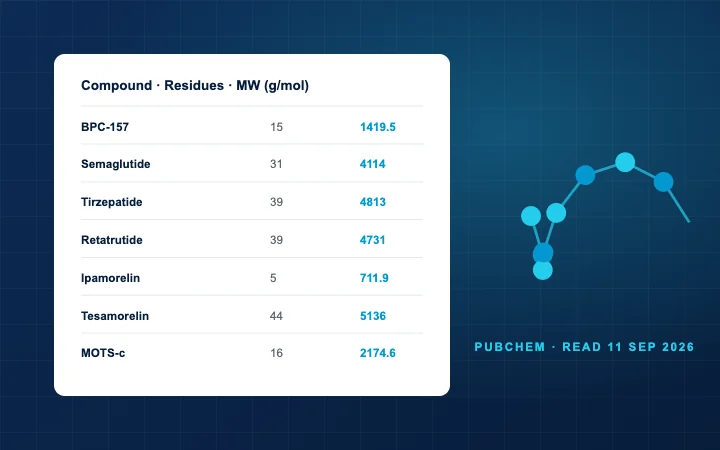
Length, molecular formula and calculated mass for every catalogue compound, so a certificate's observed mass can be checked against it.
Read the post →
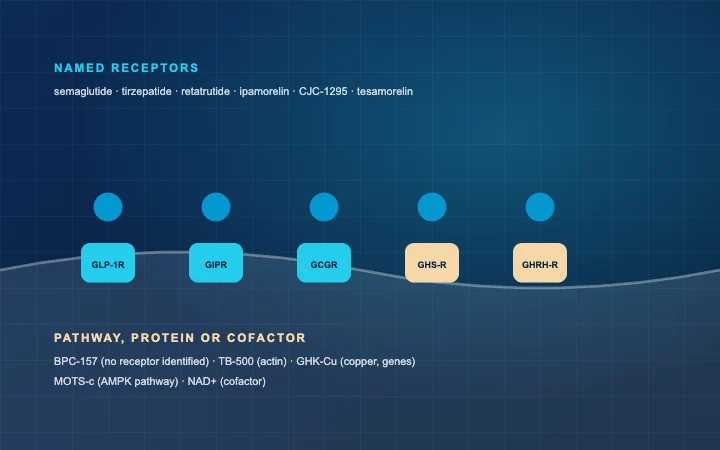
Not every peptide works through a surface receptor. A table of which receptor or target each catalogue compound acts on, and which have none.
Read the post →
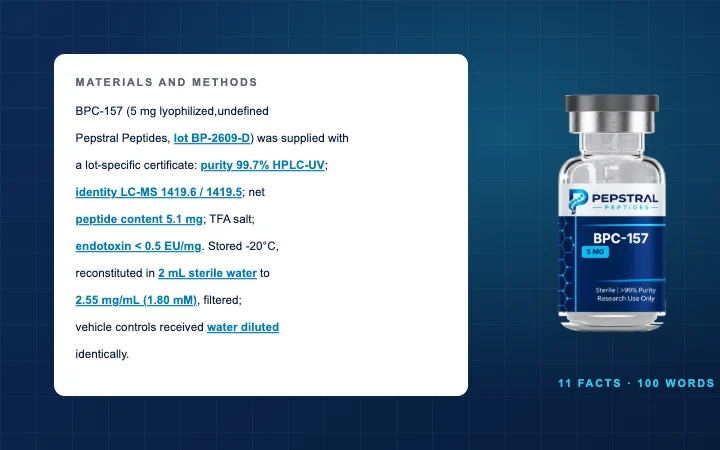
A methods section must let another lab obtain the same material. The fields to report for a research peptide, with a worked example.
Read the post →
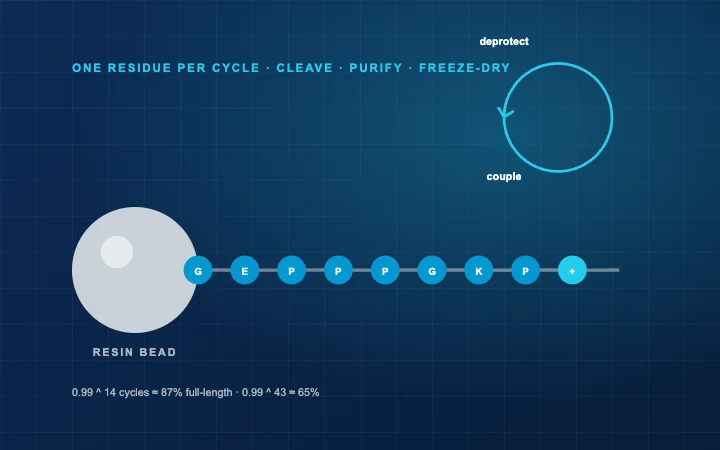
Solid-phase synthesis builds a peptide one residue at a time on a resin. Where the impurities come from, and why a certificate looks for those.
Read the post →
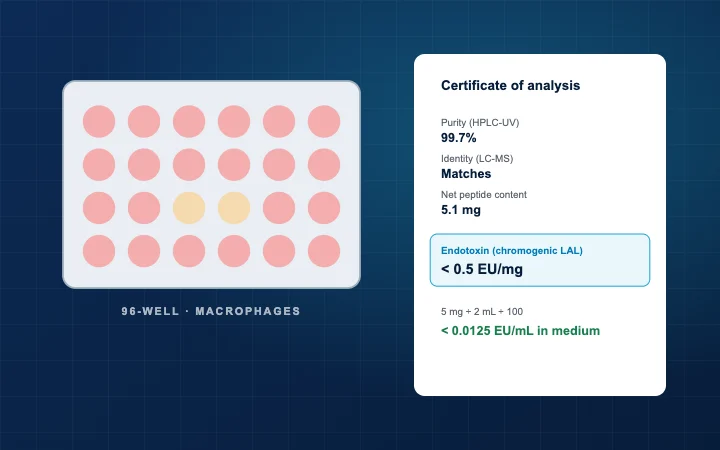
Endotoxin is the one contaminant that affects cells without the peptide doing anything. What the certificate's figure means, and what its limit hides.
Read the post →
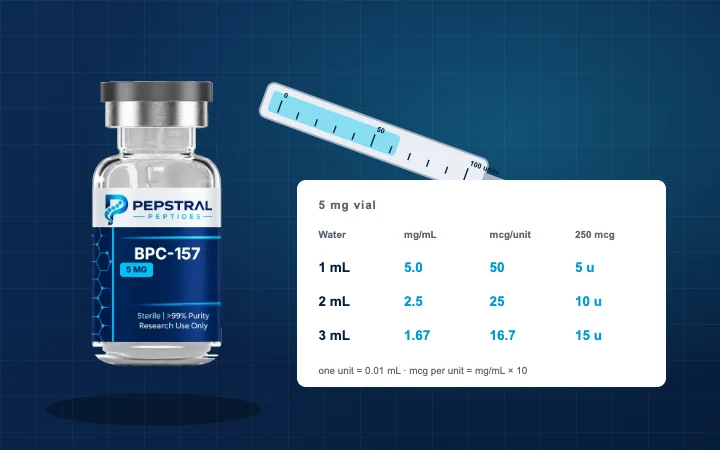
Concentration after reconstitution is one division: net content divided by volume. A worked table for every vial size in the catalogue.
Read the post →The blog covers buying, handling and research-design questions as they come up. The evergreen material lives in the guides: reading a certificate of analysis, storage and stability, one research guide per compound and the glossary.
New posts publish to the RSS feed. Every post is written for laboratory research use only and links to the lot certificate for any product it mentions.
One email when a new certificate is published, when a sold-out compound is back, or when a new compound is added. About twice a month, nothing else.