Why PEP-RTA-3 adds a glucagon receptor, and what the third arm changes
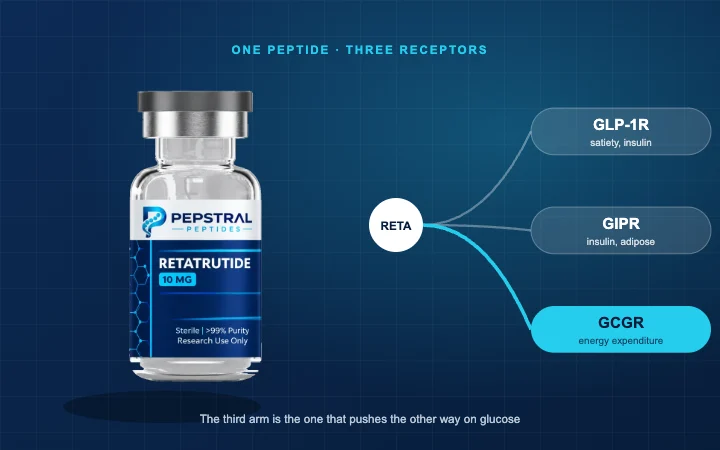
PEP-RTA-3 adds a third receptor the others do not touch. What the glucagon arm changes, and why adding it is not obviously a good idea.
Read the post →
PEP-RTA-3 adds a third receptor the others do not touch. What the glucagon arm changes, and why adding it is not obviously a good idea.
Read the post →
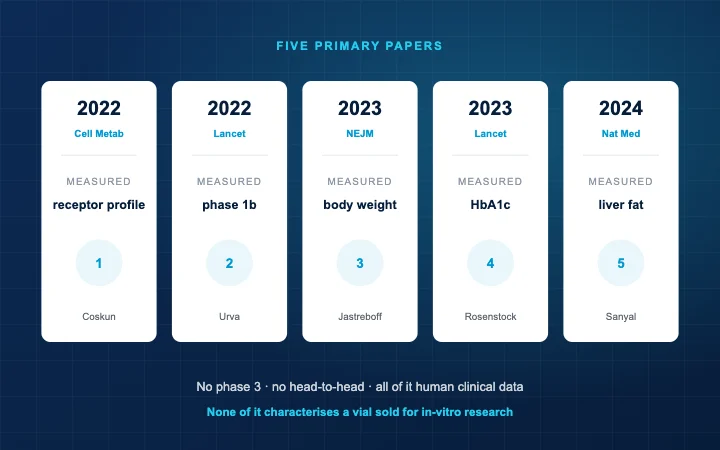
Five primary papers carry most of what is known. What each measured, in which population, and why the headline figure travels without its context.
Read the post →
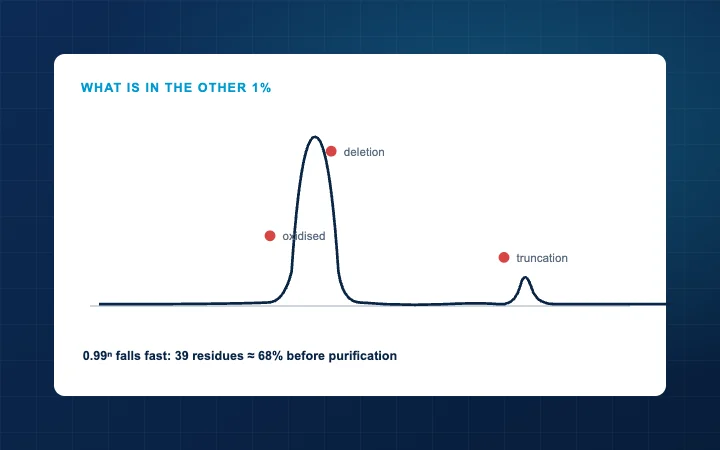
A certificate reports 99.4% and the question is what the rest is. Deletions, truncations, oxidised forms and counter-ion, in order of likelihood.
Read the post →
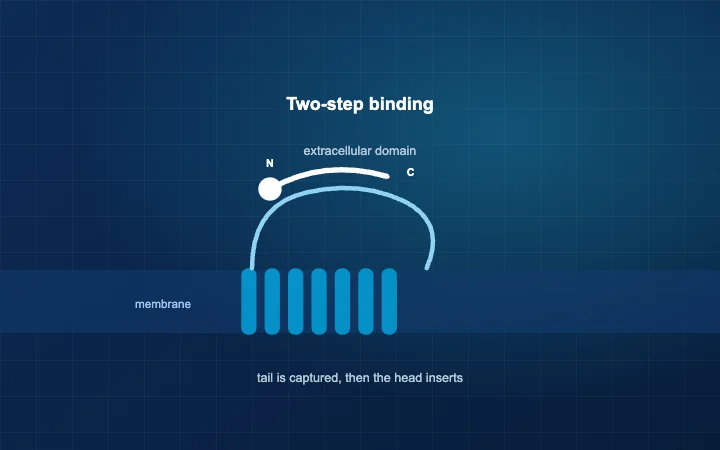
Most peptide targets in this catalogue are G protein-coupled receptors. What a GPCR is, how it signals, and why peptides so often bind one.
Read the post →
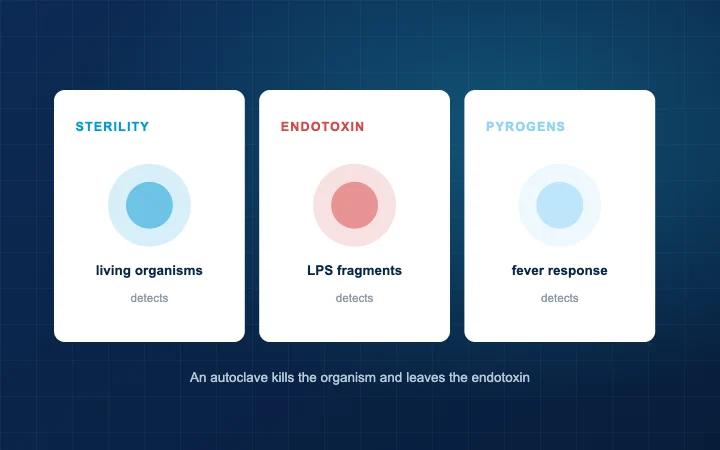
Sterility, endotoxin and pyrogen testing prove three different things. What each test covers, what it misses, and which your work needs.
Read the post →
The bioregulators have a real literature, a coherent theory and thin independent replication. What the evidence supports, and where it stops.
Read the post →
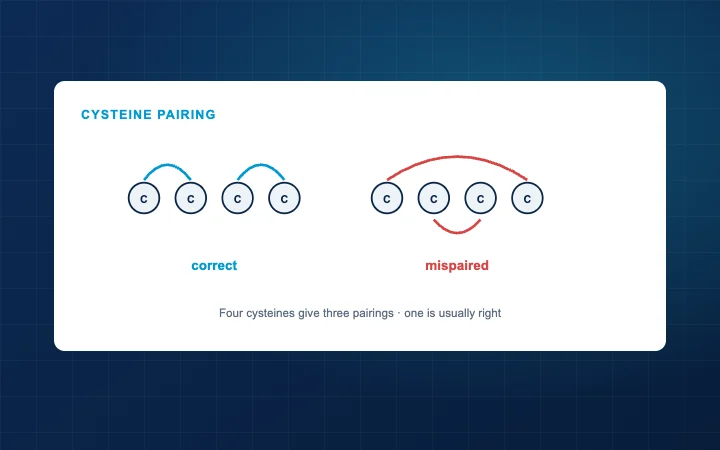
Each cysteine pair costs the molecule two hydrogens, so a folded peptide reads 2 Da lighter than its sequence predicts. How to check that on a certificate.
Read the post →
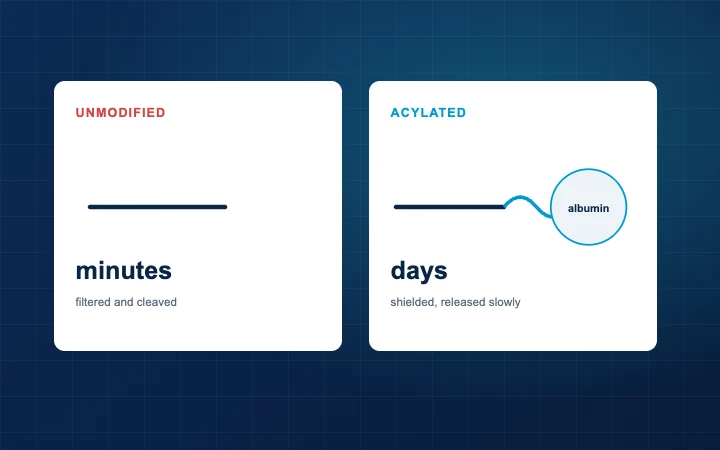
A fatty-acid chain binds albumin and keeps the peptide in circulation. Why that makes some peptides weekly and others last minutes.
Read the post →
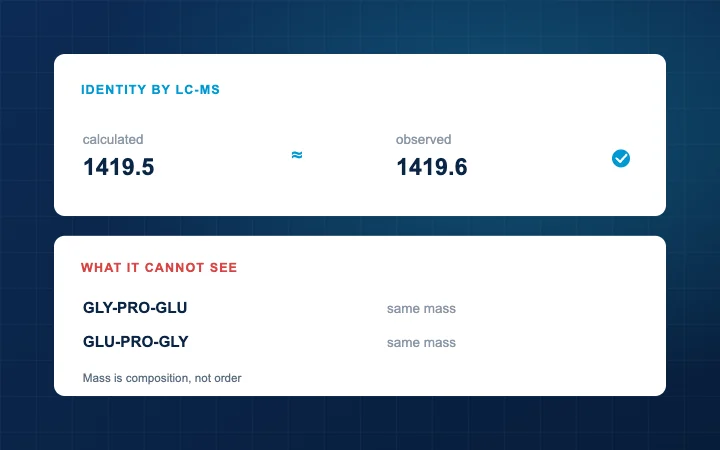
Confirmed by LC-MS means the mass matched, not that the sequence was read. What the method actually establishes, and what it cannot.
Read the post →
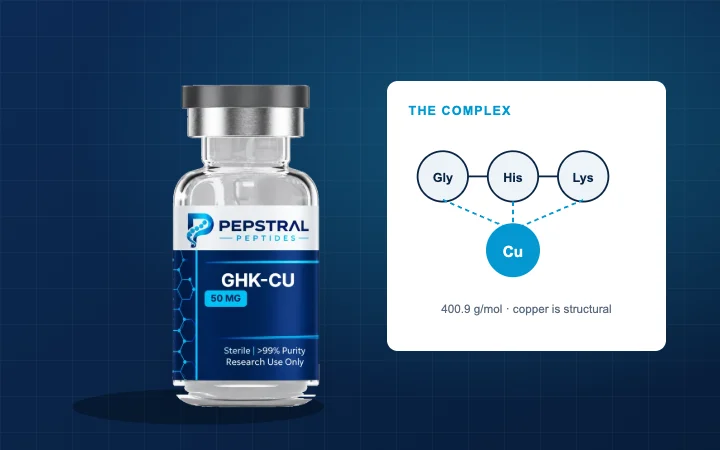
GHK-Cu is a tripeptide holding a copper atom, and the copper is a constituent, not an additive. Why the formula carries Cu and the mass is 400.9.
Read the post →
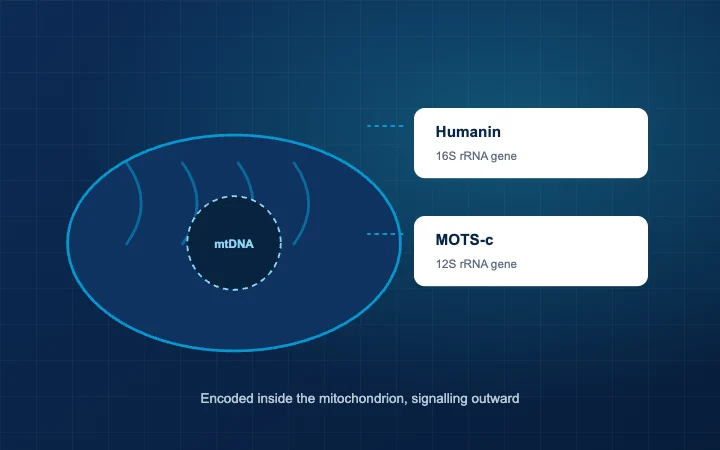
A handful of peptides are encoded in mitochondrial DNA rather than the nucleus. What that means, and which catalogue compounds belong to the group.
Read the post →
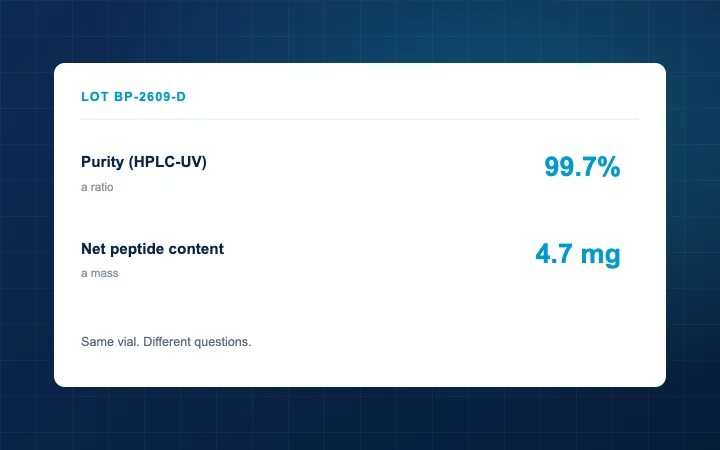
99% purity tells you nothing about how much peptide is in the vial. Purity is a ratio, content is a mass, and only one belongs in your calculation.
Read the post →The blog covers buying, handling and research-design questions as they come up. The evergreen material lives in the guides: reading a certificate of analysis, storage and stability, one research guide per compound and the glossary.
New posts publish to the RSS feed. Every post is written for laboratory research use only and links to the lot certificate for any product it mentions.
One email when a new certificate is published, when a sold-out compound is back, or when a new compound is added. About twice a month, nothing else.