For laboratory and research use only. Not for human or animal consumption. Sold to qualified researchers and licensed laboratories.
HomeLearn › Blog

Notes from the bench

Buying, handling and research-design questions answered first, then explained. Every post links to the certificate for any product it mentions.

Posts

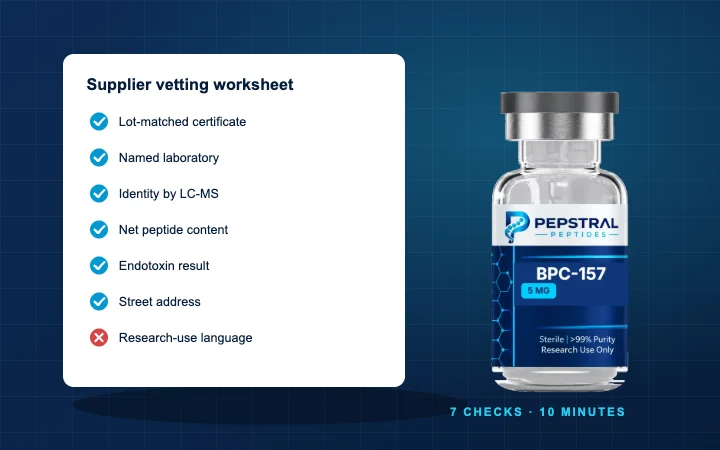
A vetting worksheet beside a labelled vial and a certificate of analysis
Buying · 11 September 2026

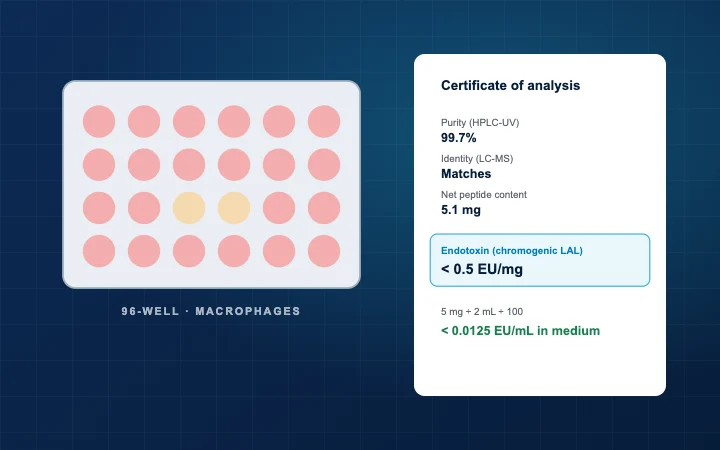
How to vet a research peptide supplier before you order

Seven checks that separate a supplier who tests every lot from one who copies a certificate: lot-matched COAs, a named lab, LC-MS identity, net peptide content, endotoxin, a real address, and how they talk about use. With a worksheet, an example support exchange, and the FDA's own test for intended use.

Read the post →
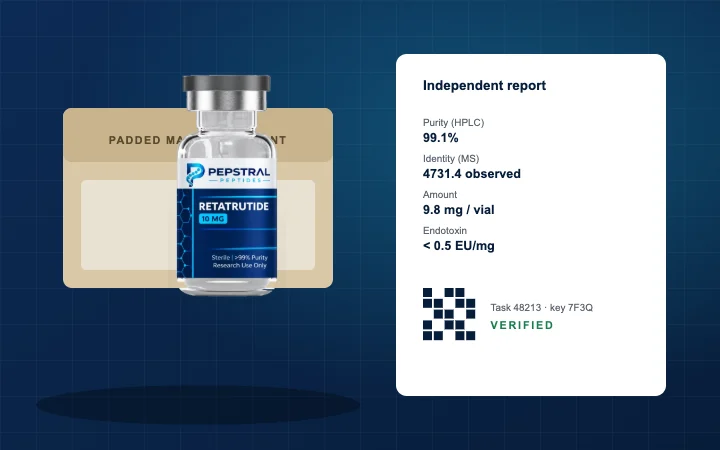
A sealed peptide vial in a padded mailer beside an analytical report with a verification code
Buying · 11 September 2026

How to get a peptide independently tested

Any researcher can send a sealed vial to an independent analytical lab and get purity by HPLC, identity by mass spectrometry and the milligrams actually in the vial back within about a week. What it costs, what to send, how to read the result against the supplier's certificate, and what to do when they disagree.

Read the post →
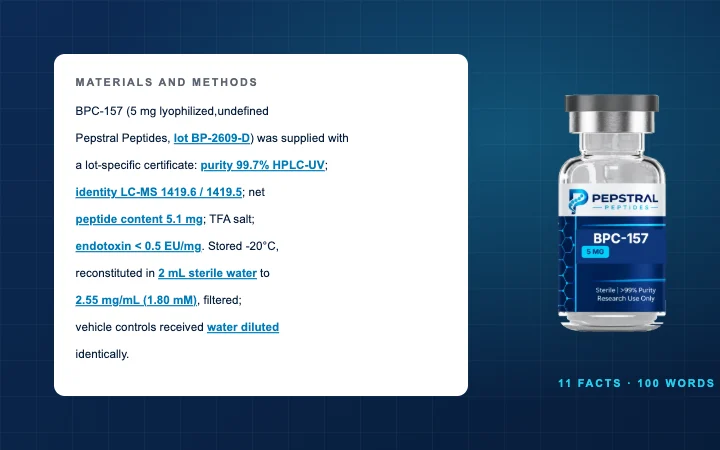
A methods paragraph with each reported field highlighted, beside a certificate and a labelled vial
Reference · 11 September 2026

How to report a research peptide in a methods section

A reviewer should be able to reconstruct exactly what was in the vial and what reached the assay. That takes eleven facts: supplier, product, lot, purity with method, identity with method, net peptide content, salt form, endotoxin, storage, reconstitution and vehicle. What each one is for, a template paragraph, and what NIH expects for key chemical resources.

Read the post →
A close-up of a lyophilized peptide vial label with each field called out
Buying · 11 September 2026

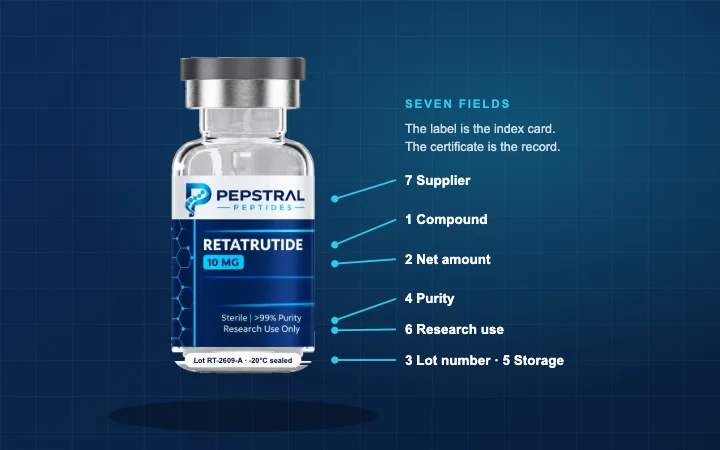
How to read a research peptide vial label

A research peptide label carries seven fields that matter: compound name, net amount, lot number, purity claim, storage instruction, the research-use statement and the supplier. What each one should say, how to check it against the certificate, a worked label-to-certificate comparison, and the three things a label cannot tell you.

Read the post →
A peptide chain growing on a resin bead through repeated deprotection and coupling cycles, ending in cleavage and purification
Reference · 11 September 2026

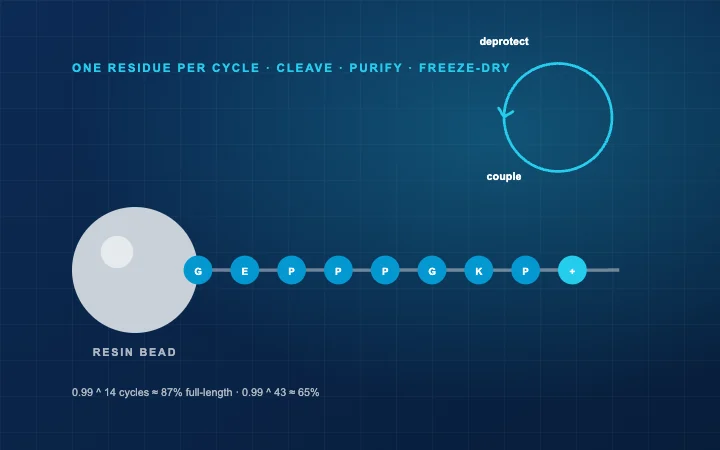
How research peptides are made: solid-phase synthesis and where the impurities come from

Almost every research peptide is built by solid-phase synthesis, one residue at a time on a resin bead, then cleaved, purified by HPLC and freeze-dried. Each step leaves a characteristic impurity, and each impurity shows up on a specific line of the certificate. The six steps, the yield arithmetic, what a crude chromatogram looks like, and the map between the two.

Read the post →

Guides, not just posts

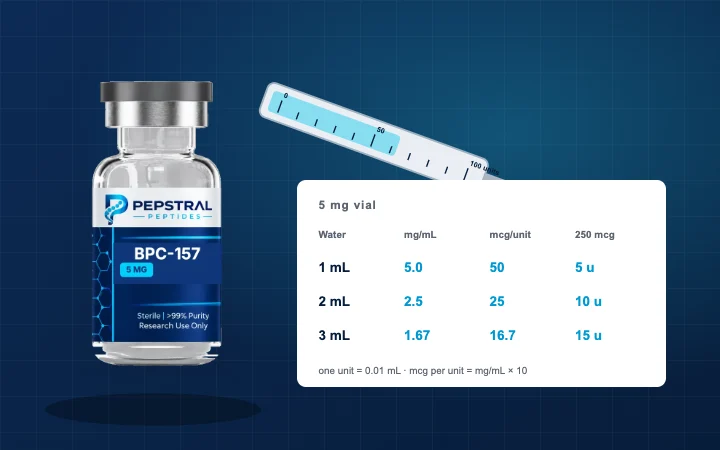
The blog covers buying, handling and research-design questions as they come up. The evergreen material lives in the guides: reconstitution, reading a certificate of analysis, storage and stability, one research guide per compound and the glossary.

Subscribe

New posts publish to the RSS feed. Every post is written for laboratory research use only and links to the lot certificate for any product it mentions.

COA on every lotPublished before listing
≥99% purityHPLC and LC-MS verified
Same-day shippingOrders before 2pm ET
Secure checkout256-bit encrypted
USA-basedSynthesized and shipped domestically
Discreet packagingPlain box, no product names

Restock alerts and new lot reports, by email

One email when a new certificate is published, when a sold-out compound is back, or when a new compound is added. About twice a month, nothing else.