Research design · 14 September 2026
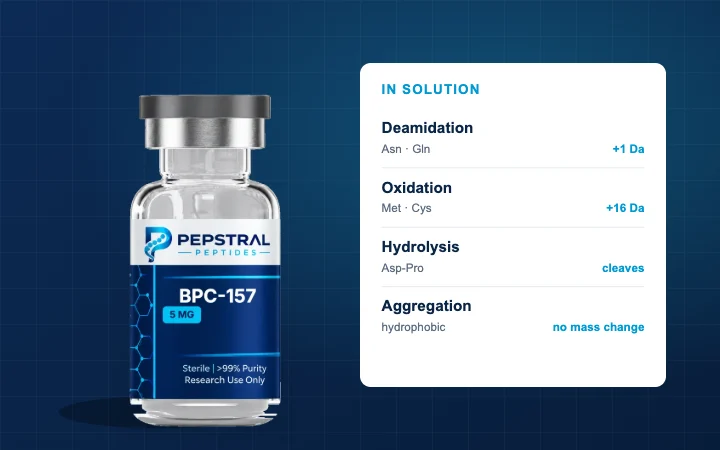
How long does a reconstituted peptide last?
There is no single answer, and a supplier who gives one is guessing. What sets the limit for your peptide, and how to decide a working window.
Read the post →
There is no single answer, and a supplier who gives one is guessing. What sets the limit for your peptide, and how to decide a working window.
Read the post →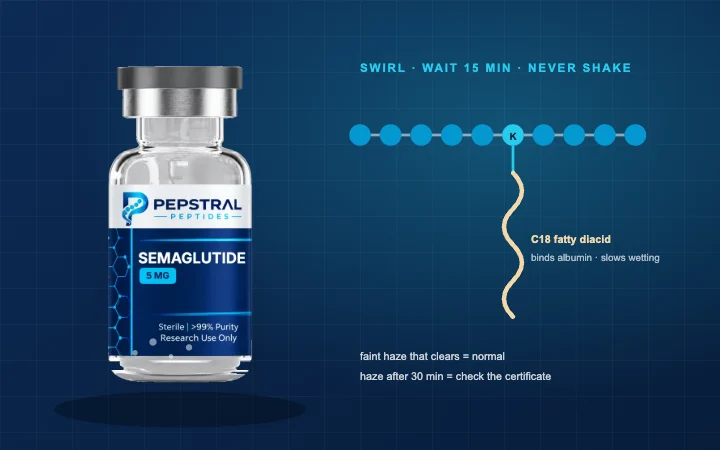
The fatty-acid chain that extends half-life also makes these peptides slow to dissolve. Why that happens, and how to reconstitute without forcing it.
Read the post →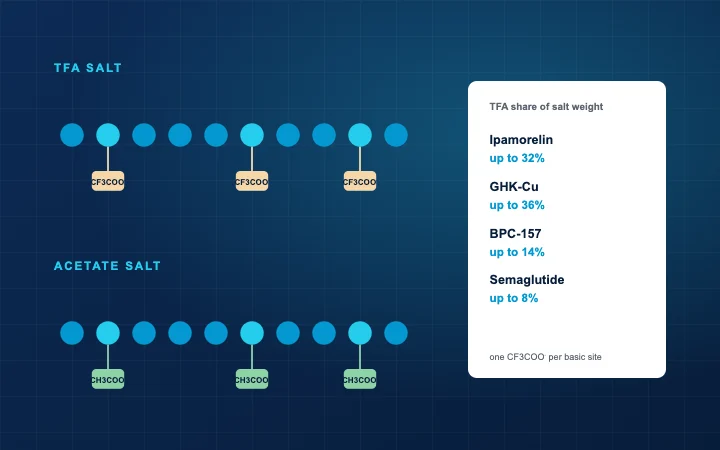
Nearly every research peptide arrives as a TFA salt because TFA cuts the chain off the resin. When the counter-ion matters, and when it does not.
Read the post →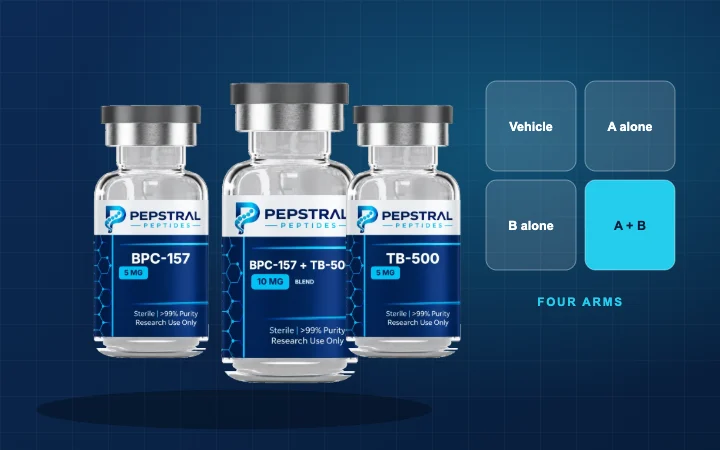
A blend means fewer vials and a fixed ratio you cannot change. When that trade is right for a study design, and when separate vials win.
Read the post →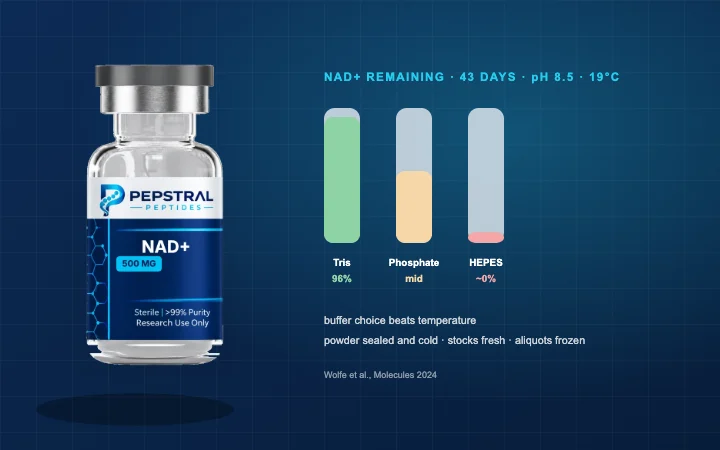
NAD+ is the one compound here that is not a peptide. Why it ships as a 500 mg vial, how fast it degrades in solution, and what sets that rate.
Read the post →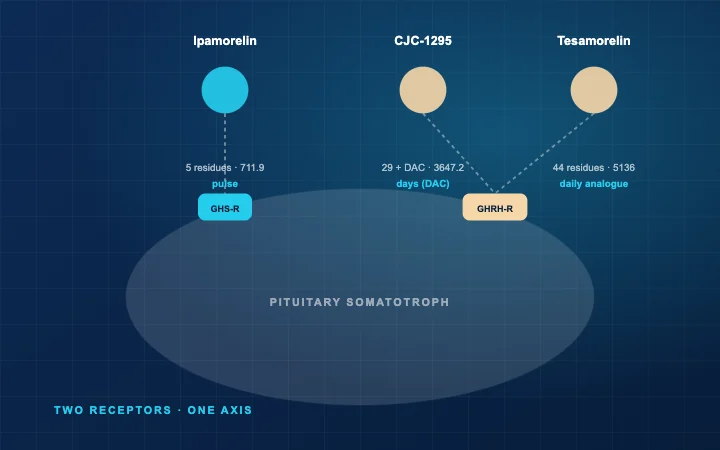
Three growth hormone axis compounds, two different receptors. Which receptor each one hits, how long each lasts, and what that means for a design.
Read the post →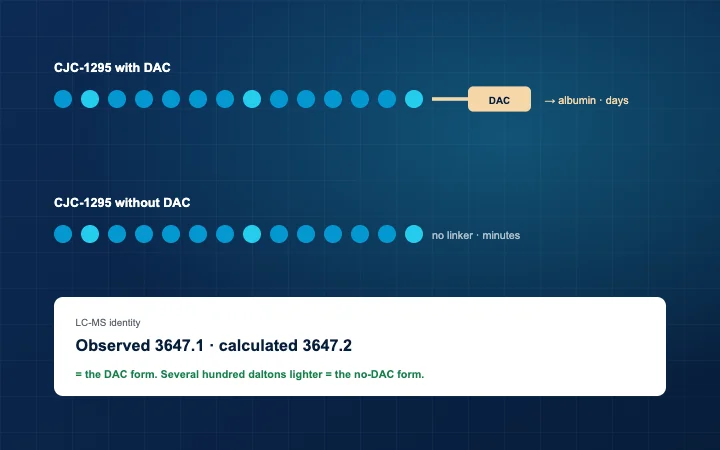
Two different molecules are sold as CJC-1295. What DAC actually is, how the masses differ, and how to tell from a certificate which one you have.
Read the post →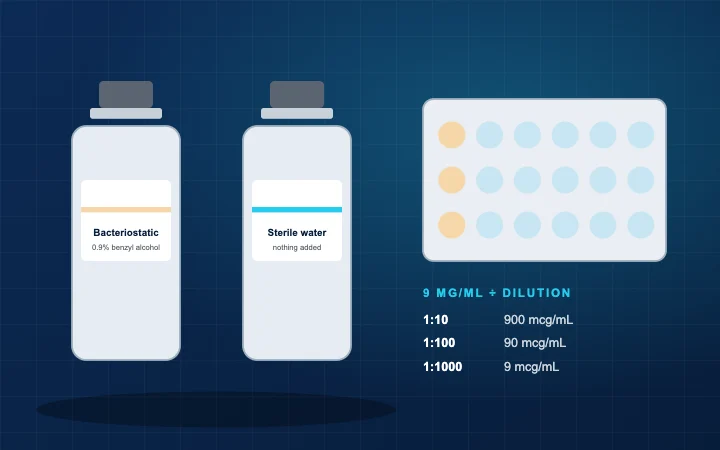
Bacteriostatic water carries 0.9% benzyl alcohol. Why that preservative matters in cell work, and at what dilution it stops mattering.
Read the post →The blog covers buying, handling and research-design questions as they come up. The evergreen material lives in the guides: reading a certificate of analysis, storage and stability, one research guide per compound and the glossary.
New posts publish to the RSS feed. Every post is written for laboratory research use only and links to the lot certificate for any product it mentions.
One email when a new certificate is published, when a sold-out compound is back, or when a new compound is added. About twice a month, nothing else.