from$105

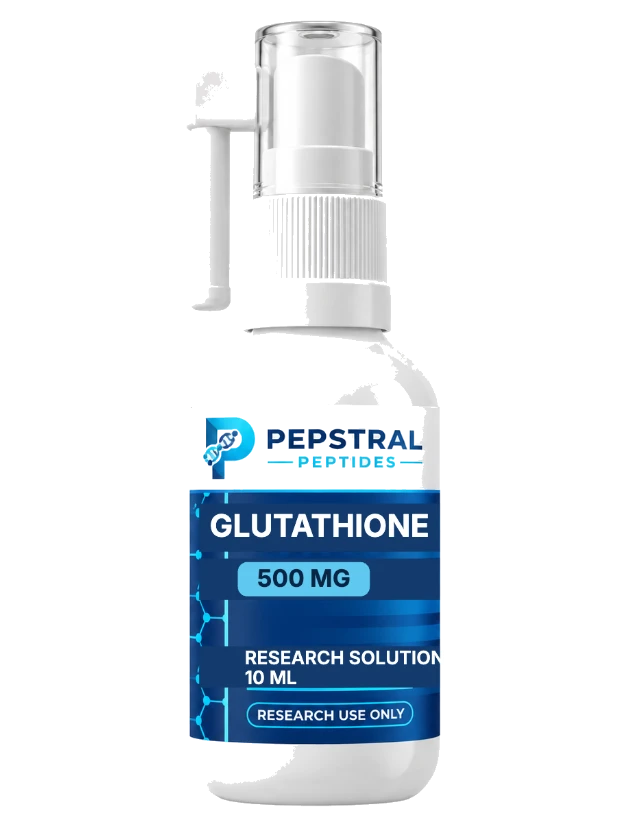
A 10 mL research solution of L-glutathione at 50 mg/mL. For laboratory research use only.
In stock · ships same day on orders before 2pm ET
Wholesale pricing starts at 25 vials per SKU, with net-30 terms for verified institutions. It is quoted per order rather than applied in the cart — ask for a wholesale quote.
Ships same day on orders before 2pm ET. For laboratory use only.
L-glutathione, the tripeptide of glutamate, cysteine and glycine, in solution at 50 mg/mL — 500 mg across a 10 mL bottle. Glutathione oxidises readily once in solution, so this is packaged to limit headspace and wants cold, dark storage from the day it arrives. Refrigerate and protect from light.
| Molecular formula | C10H17N3O6S |
| Molecular weight | 307.33 g/mol |
| Residues | 3 |
| CAS number | 70-18-8 |
| PubChem CID | 124886 |
Faster than almost anything else in the catalogue. The cysteine thiol oxidises in air to the disulfide GSSG, and the rate rises with pH, temperature and trace metal ions. The oxidation post covers the mechanism; for any assay that depends on the reduced form, prepare fresh from the dry compound rather than relying on a stored solution.
Because glutathione is a 307-dalton tripeptide used at far higher mass than a signalling peptide. 50 mg/mL is about 163 millimolar; the molarity post explains why mass and molar amount diverge across the catalogue.
No. Every product on this site is sold for in-vitro laboratory research only and is not for human or animal consumption, diagnostic or therapeutic use.
Limited time
Applied automatically at checkout — no code needed.
One email when a new certificate is published, when a sold-out compound is back, or when a new compound is added. About twice a month, nothing else.