What is NAD+, and what is it studied for?
NAD+ is nicotinamide adenine dinucleotide, the coenzyme at the centre of cellular energy metabolism and the substrate consumed by sirtuins, PARP enzymes and CD38. It is not a peptide. It is supplied in the longevity category because it is used alongside the peptides there in cellular-ageing, mitochondrial-function and DNA-repair research, and because cellular NAD+ levels decline with age in most tissues studied.
What is the structure of NAD+?
A dinucleotide of adenine and nicotinamide joined through two phosphate groups, with a molecular weight of about 663 daltons. Supplied as a lyophilized powder; identity by LC-MS, purity by HPLC-UV. It cycles between NAD+ and its reduced form NADH in redox reactions.
How is NAD+ thought to work?
As a redox cofactor NAD+ carries electrons in glycolysis, the TCA cycle and oxidative phosphorylation. As a substrate it is consumed by sirtuins in deacetylation reactions linked to metabolic regulation and by PARPs in DNA repair. Falling NAD+ with age reduces sirtuin activity, which is the hypothesis behind most NAD+ research; raising it through precursors or direct supply is the intervention being tested.
Which research areas use NAD+?
| Area | Typical models and endpoints |
|---|---|
| Sirtuin and PARP activity | Enzyme assays and cellular readouts of deacetylation and DNA-repair capacity. |
| Mitochondrial function | Respiration, membrane potential and biogenesis in cell models. |
| NAD+/NADH ratio | Redox-state measurement under metabolic stress. |
| Combination with mitochondrial peptides | Co-treatment with MOTS-c and related compounds. |
What does the published literature show?
Reviews by Rajman, Chwalek and Sinclair in Cell Metabolism (2018) and by Covarrubias and colleagues in Nature Reviews Molecular Cell Biology (2021) summarise the decline of NAD+ with age and the preclinical results of restoring it. Human data mostly concern oral precursors rather than NAD+ itself. Research use of the material sold here is in-vitro and preclinical.
How is NAD+ handled in the laboratory?
Sealed at -20°C for 24 months. In solution NAD+ degrades within days even when refrigerated, so prepare fresh for each experiment rather than storing a stock. The reconstitution guide covers volumes and syringe units; the storage guide covers stability by compound class.
What does the current certificate show?
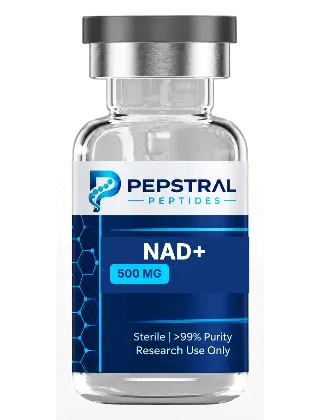
Lot ND-2608-B tested at 99.3% purity by HPLC-UV, identity confirmed by LC-MS, endotoxin below 0.5 EU/mg. The certificate is in the COA library and the lot number on the vial matches it. Sold as 500 mg net peptide per vial at $100, for laboratory research only.
Frequently asked questions
Is NAD+ a peptide?
No. It is a dinucleotide coenzyme, listed here because it sits in the same research programmes as the longevity peptides.
What does lot ND-2608-B report?
99.3% purity by HPLC-UV, identity by LC-MS, endotoxin below 0.5 EU/mg.
Why prepare it fresh?
NAD+ hydrolyses in aqueous solution over days, so a stored stock loses potency; make what the experiment needs.
References
- Rajman L, Chwalek K, Sinclair DA. Therapeutic potential of NAD-boosting molecules: the in vivo evidence. Cell Metab. 2018.
- Covarrubias AJ et al. NAD+ metabolism and its roles in cellular processes during ageing. Nat Rev Mol Cell Biol. 2021.
Clinical results cited above describe regulated trials of pharmaceutical products and are given as context for research interest only. Nothing on this page describes or recommends use of the material sold here in humans or animals.