from$105

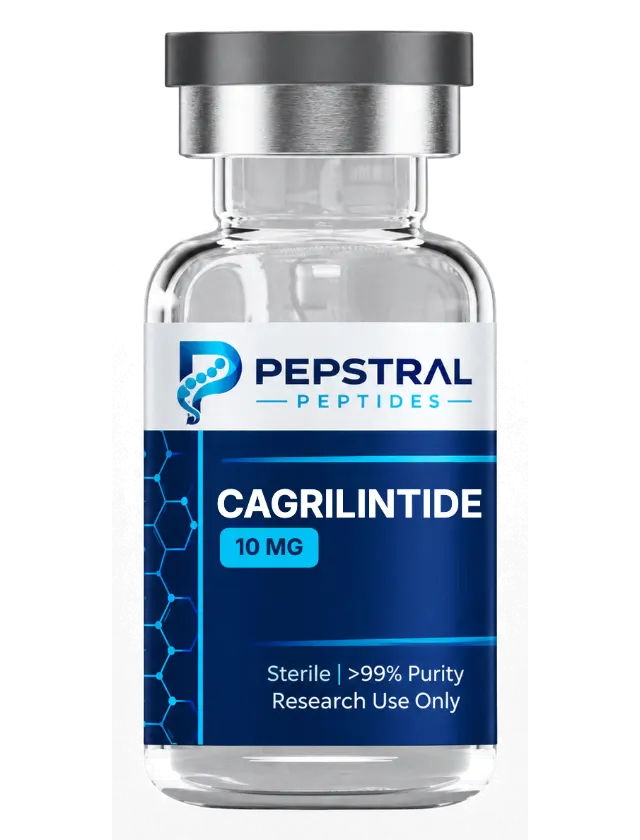
Long-acting amylin analogue studied alongside GLP-1 agonists in metabolic research.
In stock · ships same day on orders before 2pm ET
Wholesale pricing starts at 25 vials per SKU, with net-30 terms for verified institutions. It is quoted per order rather than applied in the cart — ask for a wholesale quote.
Ships same day on orders before 2pm ET. For laboratory research use only. Not for human or animal consumption.
PEP-CAG-A is a long-acting synthetic analogue of amylin, the 37-amino-acid hormone co-secreted with insulin by pancreatic beta cells. It is acylated to extend its half-life and is studied alongside GLP-1 receptor agonists because amylin and incretin signalling act on appetite and gastric emptying through separate receptor systems. Pepstral supplies it as a lyophilized powder for in-vitro laboratory research only.
→Read the full PEP-CAG-A research guide
All applications above are in-vitro or preclinical research contexts. PEP-CAG-A is sold for laboratory research only and is not for human or animal use.
No laboratory certificate for PEP-CAG-A is published in the COA library yet. Our other lots are tested by an independent US laboratory for identity, content, purity and endotoxin before listing, and we will not claim results for this one that we cannot show you. Ask us for the lot report before ordering and we will send the one that matches the vial you receive.
Sealed vials are stored at -20°C away from light and keep for 24 months. To reconstitute, add bacteriostatic water slowly down the inside wall of the vial and swirl until clear; never shake. Once in solution, keep at 2 to 8°C and use within our 28-day default for a preserved solution. The concentration table gives the dilution volumes and microlitre aliquots for this vial.
The two act through different receptor families, so a combination lets researchers separate amylin-mediated effects from incretin-mediated ones in the same model.
No. Both are amylin analogues, but PEP-CAG-A is acylated for a longer half-life and has a different substitution pattern.
No. Every product on this site is sold for in-vitro laboratory research only and is not for human or animal consumption, diagnostic or therapeutic use.
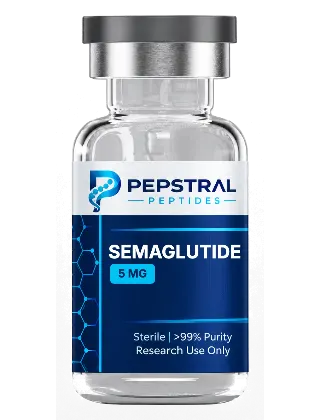
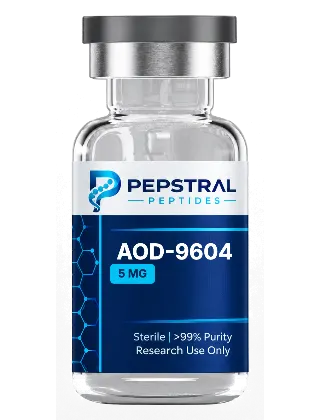
Limited time
Applied automatically at checkout — no code needed.
One email when a new certificate is published, when a sold-out compound is back, or when a new compound is added. About twice a month, nothing else.