What is the BPC-157 and TB-500 blend, and when is it used?
The blend co-lyophilizes BPC-157 and TB-500 in one vial at a fixed 1:1 ratio, 5 mg of each. It exists for recovery protocols that use both peptides together and want the ratio identical from vial to vial. The two act through different proposed mechanisms, one on growth-factor and angiogenic signalling, the other on actin dynamics, which is why they are paired.
What is the structure of BPC-157 + TB-500?
Two separately synthesized and purified peptides combined before lyophilization. The certificate reports HPLC purity and LC-MS identity for each component individually; the label's 10 mg is the sum of two 5 mg net-peptide quantities confirmed by amino-acid analysis.
How is BPC-157 + TB-500 thought to work?
See the individual guides. In combination protocols the rationale is complementary: BPC-157's reported effects on growth-factor receptor expression and vascular signalling, and TB-500's on actin-driven cell migration. Whether the combination is additive, synergistic or neither is a research question, not an established result.
Which research areas use BPC-157 + TB-500?
| Area | Typical models and endpoints |
|---|---|
| Combined recovery protocols | Tendon, ligament and muscle injury models with paired-peptide arms. |
| Ratio-controlled comparisons | Blend arms against each single peptide at matched dose. |
| Wound healing | Closure and vessel-density endpoints. |
| Protocol standardisation | Multi-site studies where preparation variance must be minimised. |
What does the published literature show?
The individual peptides each have a preclinical literature; the combination has very little published data of its own. Researchers using the blend are usually extending single-peptide protocols and should design a single-peptide arm alongside it.
How is BPC-157 + TB-500 handled in the laboratory?
Standard reconstitution. Both components are stable in solution at 2 to 8°C; follow the 28-day window. Because the ratio is fixed, researchers who need a different ratio order the single vials. The reconstitution guide covers volumes and syringe units; the storage guide covers stability by compound class.
What does the current certificate show?
Lot BL-2609-B tested at 99.1% purity by HPLC-UV, identity confirmed by LC-MS, endotoxin below 0.5 EU/mg. The certificate is in the COA library and the lot number on the vial matches it. Sold as 10 mg blend net peptide per vial at $108, for laboratory research only.
Frequently asked questions
How is a blend certificate different?
The laboratory runs HPLC-UV and LC-MS on the blend and reports each peptide's purity and identity separately. Lot BL-2609-B shows both at 99.1% or above.
Can the ratio be changed?
Not in the blend. Order the two single vials, or the Repair pair bundle, for independent dosing.
Why is blend purity slightly lower than the singles?
Two sequences share one purification and one lyophilization, which costs a fraction of a percent. The listing threshold of 99.0% still applies.
References
- See the BPC-157 and TB-500 guides for the underlying literature.
Clinical results cited above describe regulated trials of pharmaceutical products and are given as context for research interest only. Nothing on this page describes or recommends use of the material sold here in humans or animals.
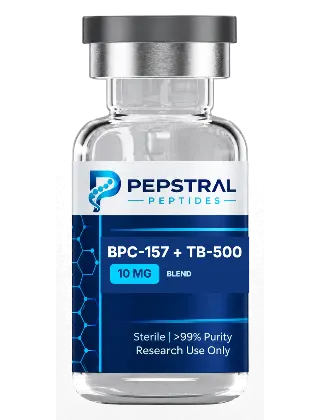 BPC-157 + TB-500 10 mg blend
$108 per vial
Lot BL-2609-B · 99.1% HPLC · certificate published
View productRelated
- BPC-157 research guide · BPC-157 5 mg
- TB-500 research guide · TB-500 5 mg
- Research peptide reference table: length, formula and molecular weight for 12 compounds
- Which receptor does each research peptide act on? A target table for the catalog
- Peptide blends vs single compounds: which fits the study design?
- Glossary of certificate terms