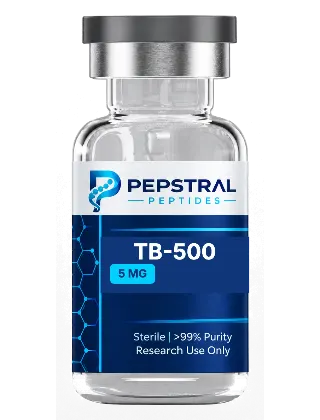
What is TB-500, and what is it studied for?
TB-500 is a synthetic peptide fragment of thymosin beta-4, a 43-amino-acid protein present in nearly every cell type that binds and sequesters actin, the structural protein cells use to move and divide. It is studied in cell-migration, wound-healing and tissue-recovery models where actin dynamics and angiogenesis are the endpoints.
What is the structure of TB-500?
The fragment corresponds to the actin-binding region of thymosin beta-4, centred on the LKKTET motif, supplied lyophilized as the acetate salt. Because it is a fragment rather than the full protein, studies that require complete thymosin beta-4 should specify the full-length molecule. Identity by LC-MS and purity by HPLC-UV on every lot.
How is TB-500 thought to work?
Thymosin beta-4 sequesters G-actin, regulating the pool available for polymerisation and therefore cell motility. It has been reported to promote endothelial and keratinocyte migration, angiogenesis, and to reduce inflammation in injury models. The active fragment reproduces the actin-binding activity in vitro.
Which research areas use TB-500?
| Area | Typical models and endpoints |
|---|---|
| Actin dynamics | Actin-binding and polymerisation assays; cytoskeletal imaging. |
| Wound healing | Dermal wound closure, keratinocyte migration, corneal injury models. |
| Angiogenesis | Endothelial tube formation and vessel-density endpoints. |
| Cardiac and skeletal muscle injury | Post-injury recovery models in rodents. |
What does the published literature show?
Thymosin beta-4 has a substantial literature, including reviews by Goldstein, Hannappel and Kleinman describing its actin-sequestering role and repair-related activity, and studies of cardiac repair after injury. Work on the isolated fragment is smaller and mostly preclinical. There are no completed human trials of TB-500 as sold for research.
How is TB-500 handled in the laboratory?
Dissolves readily. Standard reconstitution, refrigerate at 2 to 8°C, 28-day window. Avoid freeze-thaw cycles. The reconstitution guide covers volumes and syringe units; the storage guide covers stability by compound class.
What does the current certificate show?
Lot TB-2608-A tested at 99.3% purity by HPLC-UV, identity confirmed by LC-MS, endotoxin below 0.5 EU/mg. The certificate is in the COA library and the lot number on the vial matches it. Sold as 5 mg net peptide per vial at $55, for laboratory research only.
Frequently asked questions
Is TB-500 the same as thymosin beta-4?
No. It is the active actin-binding fragment, not the full 43-residue protein.
What does lot TB-2608-A report?
99.3% purity by HPLC-UV, identity by LC-MS, endotoxin below 0.5 EU/mg.
How much water for a 5 mg vial?
2 mL gives 2.5 mg/mL; a 250 mcg draw is 10 units on a U-100 syringe.
References
- Goldstein AL, Hannappel E, Kleinman HK. Thymosin beta4: actin-sequestering protein moonlights to repair injured tissues. Trends Mol Med. 2005.
- Malinda KM et al. Thymosin beta4 accelerates wound healing. J Invest Dermatol. 1999.
- Bock-Marquette I et al. Thymosin beta4 activates integrin-linked kinase and promotes cardiac cell migration, survival and cardiac repair. Nature. 2004.
Clinical results cited above describe regulated trials of pharmaceutical products and are given as context for research interest only. Nothing on this page describes or recommends use of the material sold here in humans or animals.