What is tirzepatide, and what is it studied for?
Tirzepatide is a 39-amino-acid synthetic peptide with agonist activity at both the GIP and GLP-1 receptors. It is the reference compound for dual incretin research: how engaging both receptors together affects insulin secretion, appetite signalling and body composition compared with GLP-1 activation alone.
What is the structure of Tirzepatide?
The sequence is based on native GIP with modifications that add GLP-1 receptor affinity, a C20 fatty-diacid side chain for albumin binding and a half-life of about five days, and aminoisobutyric acid substitutions that protect it from DPP-4 cleavage. Supplied lyophilized, identity by LC-MS, purity by HPLC-UV on every lot.
How is Tirzepatide thought to work?
GLP-1 receptor activation drives glucose-dependent insulin release and slows gastric emptying; GIP receptor activation potentiates insulin secretion and acts on adipose tissue and on central appetite circuits. The compound is biased toward GIP receptor affinity, and part of the research interest is whether that bias explains the difference from GLP-1-only agonists.
Which research areas use Tirzepatide?
| Area | Typical models and endpoints |
|---|---|
| Dual incretin signalling | cAMP and beta-arrestin recruitment assays at each receptor, and the effect of the GIP bias on downstream signalling. |
| Beta-cell function | Insulin secretion and islet models under glucose challenge. |
| Appetite and gastric emptying | Central and gastrointestinal endpoints in rodent models. |
| Comparison with GLP-1-only agonists | Matched-exposure arms against semaglutide. |
What does the published literature show?
The SURMOUNT-1 trial (Jastreboff and colleagues, New England Journal of Medicine, 2022) reported dose-dependent weight reduction over 72 weeks, and the SURPASS programme established glycaemic results in type 2 diabetes. Mechanistic work on the GIP component continues, including whether GIP receptor agonism or antagonism is the relevant contribution. These are clinical results in regulated trials and are cited here as the context for research interest, not as a description of research use of the material sold on this site.
How is Tirzepatide handled in the laboratory?
Slow to dissolve because of the side chain; add water down the wall, swirl, allow a few minutes. Light-sensitive in solution: carton, 2 to 8°C, 28-day window. The reconstitution guide covers volumes and syringe units; the storage guide covers stability by compound class.
What does the current certificate show?
Lot TZ-2608-C tested at 99.2% purity by HPLC-UV, identity confirmed by LC-MS, endotoxin below 0.5 EU/mg. The certificate is in the COA library and the lot number on the vial matches it. Sold as 10 mg net peptide per vial at $100, for laboratory research only.
Frequently asked questions
Why is tirzepatide chosen over semaglutide for some studies?
When the question involves the GIP pathway or the interaction between the two incretin receptors, only a dual agonist can test it.
What purity does the current lot report?
Lot TZ-2608-C: 99.2% by HPLC-UV, identity by LC-MS, endotoxin below 0.5 EU/mg.
Does tirzepatide degrade faster than shorter peptides?
No faster in sealed lyophilized form. In solution, follow the 28-day refrigerated window and protect from light.
References
- Jastreboff AM et al. Tirzepatide once weekly for the treatment of obesity. N Engl J Med. 2022.
- Coskun T et al. LY3298176, a novel dual GIP and GLP-1 receptor agonist for the treatment of type 2 diabetes mellitus: from discovery to clinical proof of concept. Mol Metab. 2018.
Clinical results cited above describe regulated trials of pharmaceutical products and are given as context for research interest only. Nothing on this page describes or recommends use of the material sold here in humans or animals.
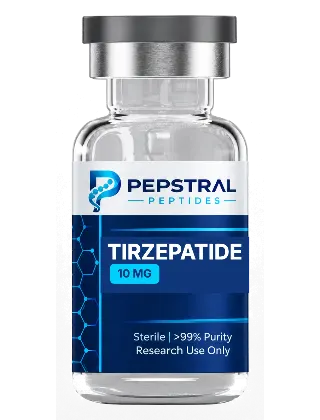 Tirzepatide 10 mg
$100 per vial
Lot TZ-2608-C · 99.2% HPLC · certificate published
View product