What is semaglutide, and what is it studied for?
Semaglutide is a 31-residue analogue of human GLP-1 modified for a long circulating half-life. It is the most extensively characterised compound in the incretin class, which makes it the standard comparator in metabolic, appetite and glucose-regulation research and the reference against which newer dual and triple agonists are measured.
What is the structure of Semaglutide?
Two amino-acid substitutions protect the peptide from DPP-4 degradation, and a C18 fatty-diacid side chain attached through a linker binds albumin, giving a half-life of about a week. It is supplied as a lyophilized powder with LC-MS identity and HPLC purity on every certificate.
How is Semaglutide thought to work?
Activation of the GLP-1 receptor increases glucose-dependent insulin secretion, suppresses glucagon release, slows gastric emptying and acts on hypothalamic and brainstem circuits that regulate intake. The receptor is expressed in pancreas, gut, brain, heart and kidney, which is why semaglutide appears in research well beyond metabolism.
Which research areas use Semaglutide?
| Area | Typical models and endpoints |
|---|---|
| GLP-1 receptor pharmacology | Binding, activation and internalisation assays; comparison of signalling bias against native GLP-1. |
| Islet and beta-cell models | Glucose-dependent insulin secretion and beta-cell survival. |
| Central appetite circuits | Hypothalamic and hindbrain endpoints in rodent models. |
| Cardiovascular and renal models | Downstream effects on inflammation and vascular endpoints. |
What does the published literature show?
The STEP 1 trial (Wilding and colleagues, New England Journal of Medicine, 2021) reported sustained weight reduction over 68 weeks, and the SELECT trial in 2023 reported reduced cardiovascular events in adults with established cardiovascular disease. Decades of GLP-1 receptor research underlie these results. They are cited here as the context for research demand and do not describe research use of the material sold here.
How is Semaglutide handled in the laboratory?
Slow to dissolve; add water down the wall and swirl gently over several minutes. Light-sensitive in solution: keep in the carton at 2 to 8°C, 28-day window. The reconstitution guide covers volumes and syringe units; the storage guide covers stability by compound class.
What does the current certificate show?
Lot SM-2608-B tested at 99.6% purity by HPLC-UV, identity confirmed by LC-MS, endotoxin below 0.5 EU/mg. The certificate is in the COA library and the lot number on the vial matches it. Sold as 5 mg net peptide per vial at $60, for laboratory research only.
Frequently asked questions
Why is semaglutide the usual comparator?
It has the largest published dataset in the class, so new incretin compounds are benchmarked against it by default.
What does lot SM-2608-B report?
99.6% purity by HPLC-UV, identity by LC-MS, endotoxin below 0.5 EU/mg, net peptide content by amino-acid analysis.
Is the 5 mg vial the right size for cell work?
For most in-vitro protocols a 5 mg vial reconstituted to 2.5 mg/mL covers a full plate series. Larger programmes use the Metabolic trio bundle.
References
- Wilding JPH et al. Once-weekly semaglutide in adults with overweight or obesity. N Engl J Med. 2021.
- Lincoff AM et al. Semaglutide and cardiovascular outcomes in obesity without diabetes. N Engl J Med. 2023.
- Knudsen LB, Lau J. The discovery and development of liraglutide and semaglutide. Front Endocrinol. 2019.
Clinical results cited above describe regulated trials of pharmaceutical products and are given as context for research interest only. Nothing on this page describes or recommends use of the material sold here in humans or animals.
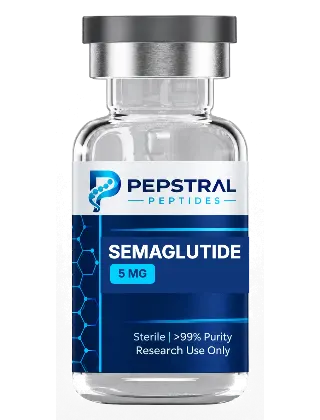 Semaglutide 5 mg
$60 per vial
Lot SM-2608-B · 99.6% HPLC · certificate published
View product