
What is retatrutide, and what is it studied for?
Retatrutide is a synthetic 39-amino-acid peptide engineered to activate three receptors at once: GIP, GLP-1 and the glucagon receptor. It is studied because the three pathways act on energy balance from different directions, and a single molecule that engages all of them lets researchers test whether the combination outperforms the single- and dual-agonist peptides that preceded it.
What is the structure of Retatrutide?
The sequence is built on the glucagon backbone with substitutions that add GIP and GLP-1 receptor activity, and it carries a C20 fatty-diacid side chain that binds albumin and extends the circulating half-life to days. It is supplied as a lyophilized acetate salt. The calculated mass is confirmed by LC-MS on every lot and the HPLC purity is reported at 220 nm.
How is Retatrutide thought to work?
GLP-1 receptor activation increases glucose-dependent insulin secretion and slows gastric emptying; GIP receptor activation is thought to potentiate insulin release and modulate adipose tissue; glucagon receptor activation raises energy expenditure and hepatic fat oxidation. The interest in retatrutide is the balance between them: the glucagon component would raise glucose on its own, and the incretin components are what allow it to be tolerated in the models where it has been tested.
Which research areas use Retatrutide?
| Area | Typical models and endpoints |
|---|---|
| Receptor pharmacology | Potency and selectivity at the three receptors in cAMP assays, and how the ratio of activity compares with tirzepatide and semaglutide. |
| Energy expenditure | Indirect calorimetry in rodent models to separate reduced intake from increased expenditure, the signature of the glucagon component. |
| Adipose and liver | Body composition, hepatic lipid content and adipose remodelling in diet-induced obesity models. |
| Comparative studies | Head-to-head arms against single and dual agonists at matched exposure. |
What does the published literature show?
The phase 2 clinical programme reported in the New England Journal of Medicine in 2023 (Jastreboff and colleagues) described dose-dependent weight reduction over 48 weeks that exceeded what had been seen with dual agonists, along with the gastrointestinal effects familiar from the incretin class. Preclinical work in rodents established the energy-expenditure contribution of the glucagon arm. These are the results that make retatrutide the most-requested comparator compound in the metabolic category; they are clinical findings in a regulated trial setting and do not describe research use of the material sold here.
How is Retatrutide handled in the laboratory?
Retatrutide is slower to dissolve than short peptides because of the fatty-diacid side chain. Add bacteriostatic water down the vial wall and allow several minutes with gentle swirling. The solution is light-sensitive: keep the vial in its carton at 2 to 8°C and use within the 28-day certificate window. The reconstitution guide covers volumes and syringe units; the storage guide covers stability by compound class.
What does the current certificate show?
Lot RT-2609-A tested at 99.4% purity by HPLC-UV, identity confirmed by LC-MS, endotoxin below 0.5 EU/mg. The certificate is in the COA library and the lot number on the vial matches it. Sold as 10 mg net peptide per vial at $105, for laboratory research only.
Frequently asked questions
How does retatrutide differ from tirzepatide in a research context?
Tirzepatide engages GIP and GLP-1. Retatrutide adds glucagon receptor activity, so it is the compound to choose when the question involves energy expenditure or hepatic fat rather than glucose signalling alone.
What does the 10 mg on the label represent?
Net peptide, confirmed by amino-acid analysis on the certificate, not gross powder weight.
Is retatrutide available in a bundle?
Yes. The Metabolic trio pairs it with tirzepatide and semaglutide at a 15% saving for side-by-side incretin work.
References
- Jastreboff AM et al. Triple-hormone-receptor agonist retatrutide for obesity: a phase 2 trial. N Engl J Med. 2023.
- Coskun T et al. LY3437943, a novel triple glucagon, GIP, and GLP-1 receptor agonist for glycemic control and weight loss: from discovery to clinical proof of concept. Cell Metab. 2022.
Clinical results cited above describe regulated trials of pharmaceutical products and are given as context for research interest only. Nothing on this page describes or recommends use of the material sold here in humans or animals.
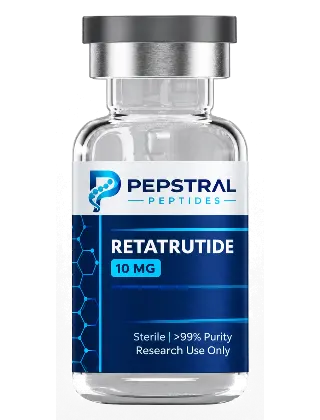 Retatrutide 10 mg
$105 per vial
Lot RT-2609-A · 99.4% HPLC · certificate published
View product