from$108

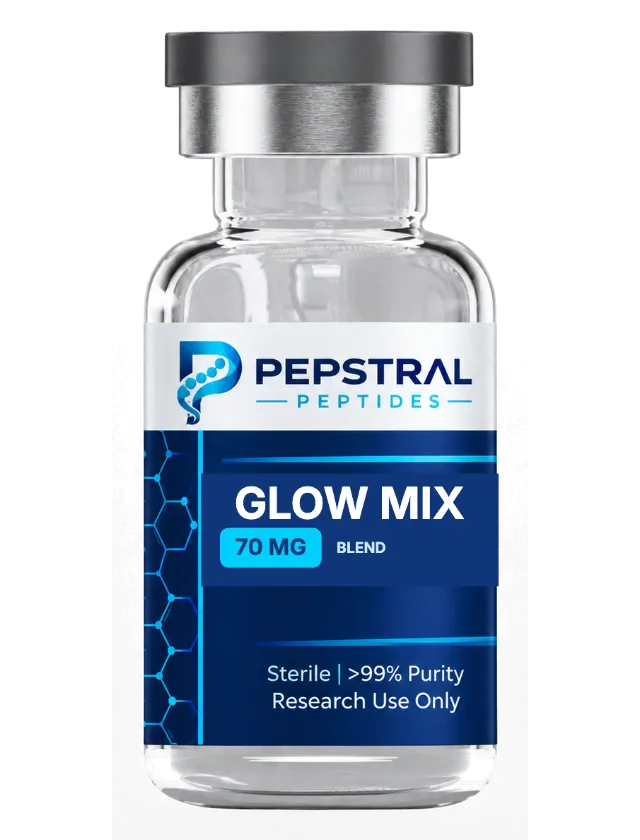
GHK-Cu, BPC-157 and TB-500 blended for dermatological research.
In stock · ships same day on orders before 2pm ET
| Quantity | Per unit | You save |
|---|---|---|
| 3 to 4 units | $139.50 | 7% |
| 5 to 9 units | $133.50 | 11% |
| 10+ units | $126.00 | 16% |
Verify lot GLO-2609-X in the COA library · This month's lot report
Ships same day on orders before 2pm ET. For laboratory research use only. Not for human or animal consumption.
The GLOW mix combines GHK-Cu, BPC-157 and TB-500 in one lot-matched vial, the three compounds most often paired in dermatological and tissue-remodelling research. Pepstral supplies it as a lyophilized powder for in-vitro laboratory research only.
All applications above are in-vitro or preclinical research contexts. GLOW mix is sold for laboratory research only and is not for human or animal use.
Every lot of GLOW mix is tested by an independent US laboratory before it is listed. The report for lot GLO-2609-X is in the COA library and the lot number printed on the vial matches it. The current results:
| Test | Method | Lot GLO-2609-X result |
|---|---|---|
| Identity | LC-MS | Matches the calculated mass for the sequence |
| Purity | HPLC-UV, 220 nm | 99.0% |
| Net peptide content | Amino acid analysis | Stated per vial on the certificate |
| Endotoxin | LAL, chromogenic | < 0.5 EU/mg |
| Sterility | USP <71> | Pass |
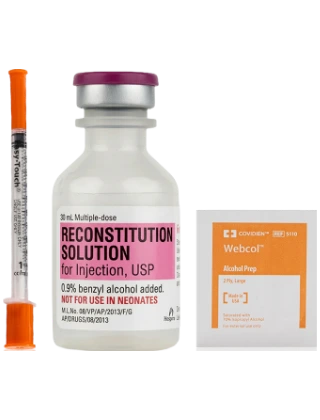
Sealed vials are stored at -20°C away from light and keep for 24 months. To reconstitute, add bacteriostatic water slowly down the inside wall of the vial and swirl until clear; never shake. Once in solution, keep at 2 to 8°C and use within the 28-day window on the certificate. The reconstitution guide covers volumes and syringe units and the concentration table gives the numbers for this vial.
They appear together in remodelling research often enough that a single co-lyophilized vial removes three separate reconstitutions.
GHK-Cu is supplied as the copper complex. Note it in a methods section, because copper is not inert in most assay systems.
No. Every product on this site is sold for in-vitro laboratory research only and is not for human or animal consumption, diagnostic or therapeutic use.
One email when a new certificate is published, when a sold-out compound is back, or when a new compound is added. About twice a month, nothing else.
All products are sold for laboratory research use only. They are not drugs, foods, supplements or cosmetics, are not approved by the FDA, and are not intended to diagnose, treat, cure or prevent any disease, or for human or animal use. To continue, confirm that you are a qualified researcher or laboratory purchaser aged 21 or over.
Exit Your confirmation is stored for this browser session only. Terms of saleEnter your email and the code lands in your inbox, along with restock alerts and the certificate for every new lot before it is listed.
WELCOME15Applied at checkout on orders over $100. One per researcher.